Olfactory tract: Difference between revisions
CSV import Tags: mobile edit mobile web edit |
CSV import |
||
| Line 28: | Line 28: | ||
[[Category:Olfactory system]] | [[Category:Olfactory system]] | ||
{{neuroscience-stub}} | {{neuroscience-stub}} | ||
<gallery> | |||
File:Cerebral_Gyri_-_Inferior_Surface2.png|Olfactory tract | |||
File:Gray732.png|Olfactory tract | |||
File:Gray724.png|Olfactory tract | |||
File:Gray772.png|Olfactory tract | |||
File:Gray729_olfactory_sulcus.png|Olfactory tract | |||
</gallery> | |||
Latest revision as of 04:35, 18 February 2025
Olfactory Tract
The olfactory tract is a bilateral structure in the brain that plays a crucial role in the processing of olfactory information. It is part of the olfactory system, which is responsible for the sense of smell.
Anatomy[edit]
The olfactory tract is a bundle of nerve fibers that connects the olfactory bulb to the olfactory cortex. It is located in the anterior cranial fossa, above the cribriform plate of the ethmoid bone. The tract is divided into two parts: the lateral and medial olfactory stria.
Function[edit]
The primary function of the olfactory tract is to transmit olfactory information from the olfactory bulb to the olfactory cortex. This information is then processed and interpreted as different smells. The olfactory tract also plays a role in the limbic system, contributing to the emotional response to smells.
Clinical significance[edit]
Damage to the olfactory tract can result in anosmia, a loss of the sense of smell. This can be caused by a variety of factors, including traumatic brain injury, neurodegenerative diseases such as Alzheimer's disease, and tumors.
See also[edit]
References[edit]
<references group="" responsive="1"></references>

This article is a neuroscience stub. You can help WikiMD by expanding it!
-
 Olfactory tract
 -
 Olfactory tract
 -
 Olfactory tract
 -
 Olfactory tract
 -
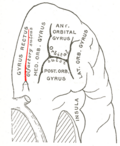 Olfactory tract


