Jean-Martin Charcot: Difference between revisions
CSV import |
CSV import |
||
| Line 32: | Line 32: | ||
[[Category:History of medicine]] | [[Category:History of medicine]] | ||
{{medicine-stub}} | {{medicine-stub}} | ||
<gallery> | |||
File:Jean-Martin_Charcot.jpg|Jean-Martin Charcot | |||
File:Legion_Honneur_Commandeur_ribbon.svg|Legion of Honour Commandeur ribbon | |||
File:Jean-Martin_Charcot_chronophotography.jpg|Jean-Martin Charcot chronophotography | |||
File:Une_leçon_clinique_à_la_Salpêtrière.jpg|Une leçon clinique à la Salpêtrière | |||
</gallery> | |||
Latest revision as of 04:26, 18 February 2025
Jean-Martin Charcot (29 November 1825 – 16 August 1893) was a French neurologist and professor of anatomical pathology. He is best known for his work on hypnosis and hysteria, and is often referred to as the founder of modern neurology. His work greatly influenced the development of various fields within medicine, including psychiatry and neurology.
Early Life and Education[edit]
Jean-Martin Charcot was born in Paris, France. He began his medical education at the University of Paris in 1843, where he developed an interest in the workings of the nervous system. Charcot's dedication to his studies and his innovative research methods quickly set him apart from his peers.
Career[edit]
After completing his education, Charcot joined the faculty at the University of Paris. He worked at the Salpêtrière Hospital, where he conducted research on diseases of the nervous system. Charcot's work at the Salpêtrière was groundbreaking; he was among the first to systematically categorize neurological disorders. He is credited with identifying and naming multiple sclerosis and Charcot-Marie-Tooth disease.
Charcot's interest in neurology extended to the study of hysteria, which he believed was a neurological disorder. He used hypnosis as a treatment and research tool, demonstrating that hysteria could be induced and removed in some patients under hypnosis. This work was controversial at the time but laid the groundwork for future psychological and neurological research.
Legacy[edit]
Jean-Martin Charcot's contributions to medicine were vast. He trained and influenced a generation of doctors and scientists, including Sigmund Freud, who would go on to found psychoanalysis. Charcot's methods of clinical observation and his approach to teaching through patient demonstrations are still used today.
Charcot was also known for his work in medical education, particularly his use of photography and live demonstrations to teach about neurological disorders. His lectures were popular and attracted students and professionals from across Europe.
Death and Recognition[edit]
Charcot died on 16 August 1893 in Morvan, France. His legacy lives on through his numerous contributions to neurology and psychiatry. The Charcot Award, named in his honor, is given for outstanding research in multiple sclerosis.
Selected Works[edit]
Jean-Martin Charcot's most notable works include:
- Lectures on the Diseases of the Nervous System - A collection of his lectures, which became a foundational text in neurology.
- Research on multiple sclerosis and Charcot-Marie-Tooth disease.
See Also[edit]

-
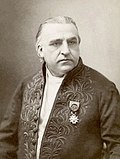 Jean-Martin Charcot
 -
 Legion of Honour Commandeur ribbon
 -
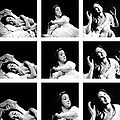 Jean-Martin Charcot chronophotography
 -
 Une leçon clinique à la Salpêtrière


