Carl Graebe: Difference between revisions
CSV import |
CSV import |
||
| Line 28: | Line 28: | ||
[[Category:People in the history of chemistry]] | [[Category:People in the history of chemistry]] | ||
{{Chemist-stub}} | {{Chemist-stub}} | ||
== Carl Graebe == | |||
<gallery> | |||
File:Carl_Graebe_1890s.jpg|Carl Graebe in the 1890s | |||
File:Carl_Graebe_1860-07-13.jpg|Carl Graebe on July 13, 1860 | |||
</gallery> | |||
Latest revision as of 01:48, 17 February 2025
Carl Graebe (24 February 1841 – 19 January 1927) was a German chemist who, together with Carl Glaser, synthesized alizarin, a red dye, from anthracene. This work was significant because it marked the first time a natural dye was synthesized, which had a profound impact on the dye industry. Graebe's contributions to organic chemistry are notable, and his work in the synthesis of alizarin represents a landmark achievement in the field of chemical synthesis.
Biography[edit]
Carl Graebe was born in Frankfurt am Main, Germany. He pursued his higher education in chemistry, studying under renowned chemists such as August Kekulé and Adolf von Baeyer. Graebe's academic journey led him to the University of Heidelberg, where he furthered his studies in organic chemistry.
In 1868, Graebe, in collaboration with Carl Glaser, embarked on research that would lead to the synthesis of alizarin from anthracene. This achievement was not only a scientific breakthrough but also had significant commercial implications, as alizarin was a highly sought-after dye previously extracted from the madder plant. The synthetic production of alizarin greatly reduced its cost and made it more accessible for use in the textile industry.
Following his success with alizarin, Graebe continued to contribute to the field of chemistry through his research and as an educator. He held positions at several universities, where he inspired the next generation of chemists with his knowledge and passion for organic chemistry.
Contributions to Chemistry[edit]
Carl Graebe's work in the synthesis of alizarin is his most notable contribution to chemistry. This achievement demonstrated the potential for synthesizing complex organic compounds from simpler ones, a concept that has become a cornerstone of organic chemistry. Graebe's method involved several steps, including the sulfonation of anthracene to anthraquinone and then bromination and subsequent fusion with potassium hydroxide to produce alizarin.
Beyond his work with alizarin, Graebe made significant contributions to the understanding of aromatic compounds. His research helped to elucidate the structure of various organic molecules, contributing to the foundational knowledge of organic chemistry.
Legacy[edit]
Carl Graebe's legacy in the field of chemistry is marked by his pioneering work in the synthesis of natural dyes and his contributions to the understanding of organic compounds. His achievements paved the way for the development of synthetic dyes, which revolutionized the dye industry and had a lasting impact on the fields of chemistry and textiles.
Graebe's work is commemorated in the naming of the Graebe-Ullmann synthesis, a method for synthesizing fused aromatic rings, which remains a significant process in organic chemistry.
See Also[edit]
.jpg)
Carl Graebe[edit]
-
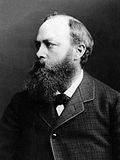 Carl Graebe in the 1890s
 -
 Carl Graebe on July 13, 1860


