Renal physiology
Renal Physiology[edit]
Renal Physiology[edit]
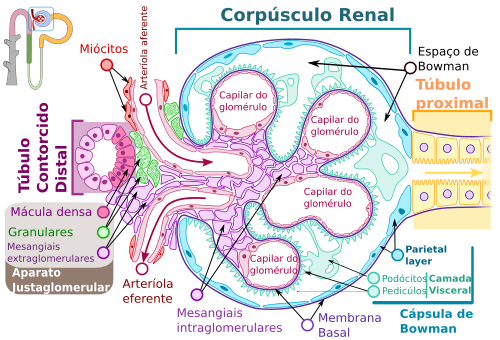
Renal physiology is the branch of physiology that focuses on the study of the kidneys (Latin: rēnēs). It encompasses the comprehensive functions of these vital organs, including their role in maintaining acid-base balance, fluid balance, electrolyte regulation, toxin clearance, nutrient absorption, blood pressure regulation, hormone production, and vitamin activation.
Functions of the Kidney[edit]
The primary functions of the kidneys in renal physiology include:
- Maintenance of Acid-Base Balance: Regulating the pH of the blood by excreting hydrogen ions and reabsorbing bicarbonate from urine.
- Regulation of Fluid Balance: Managing the body's water level by adjusting urine output.
- Electrolyte Regulation: Maintaining the balance of electrolytes, such as sodium, potassium, and calcium, in the body.
- Clearance of Toxins: Filtering and excreting waste products and toxins from the blood.
- Absorption of Nutrients: Reabsorbing essential nutrients such as glucose and amino acids from the urine.
- Blood Pressure Regulation: Managing blood pressure through the renin-angiotensin-aldosterone system.
- Hormone Production: Synthesizing hormones like erythropoietin, which stimulates red blood cell production.
- Activation of Vitamin D: Converting vitamin D into its active form, essential for calcium absorption and bone health.
Kidney Structure and Nephron Function[edit]
The kidney's structure is central to its function:
- Nephrons: The functional units of the kidney, each nephron filters blood, reabsorbs essential nutrients, and excretes waste in urine.
- Glomerulus: A network of capillaries where blood filtration begins.
- Tubular System: Where filtered fluid passes, allowing for the exchange of minerals, electrolytes, and water.
Clinical Importance[edit]
Understanding renal physiology is crucial in clinical medicine for:
- Diagnosing and treating kidney-related diseases, such as chronic kidney disease and acute kidney injury.
- Managing conditions influenced by kidney function, like hypertension and electrolyte imbalances.
- Developing treatments for kidney failure, including dialysis and transplantation strategies.
Research and Advances[edit]
Research in renal physiology continues to explore:
- Mechanisms of kidney disease and potential therapeutic targets.
- Advances in renal replacement therapies.
- The kidneys' interactions with other organ systems in health and disease.

Advertise on WikiMD — 81,000+ full articles, ~900,000 total pages, ~250 million page views. Global reach, limited time promotional rates from $1/page/day. Learn more · View stats

Translate page: - East Asian
中文,
日本,
한국어,
South Asian
हिन्दी,
தமிழ்,
తెలుగు,
Urdu,
ಕನ್ನಡ,
Southeast Asian
Indonesian,
Vietnamese,
Thai,
မြန်မာဘာသာ,
বাংলা
European
español,
Deutsch,
français,
Greek,
português do Brasil,
polski,
română,
русский,
Nederlands,
norsk,
svenska,
suomi,
Italian
Middle Eastern & African
عربى,
Turkish,
Persian,
Hebrew,
Afrikaans,
isiZulu,
Kiswahili,
Other
Bulgarian,
Hungarian,
Czech,
Swedish,
മലയാളം,
मराठी,
ਪੰਜਾਬੀ,
ગુજરાતી,
Portuguese,
Ukrainian
About WikiMD • Contact • Disclaimer • Privacy • Copyright • Site statistics
Some content and images may originate from Wikimedia Commons or Wikipedia and remain subject to their stated licenses. Unless otherwise noted, eligible WikiMD content is available under CC BY-SA 4.0.
WikiMD Wellnesspedia — Free health & wellness information for patients, students, and health professionals.

