Toilet training
Toilet training, also known as potty training, is the process of teaching young children to control their bladder and bowel movements and use the toilet for urination and defecation. This developmental milestone is a significant step towards independence for children and is an important aspect of early childhood education. The age at which toilet training begins can vary widely among children, with some starting as early as 18 months and others not until after the age of three.
Overview[edit]
Toilet training involves several steps, beginning with recognizing the signs of readiness in a child. These signs may include the child's ability to follow simple instructions, communicate when they need to go, and show discomfort with soiled diapers. Once readiness is determined, parents and caregivers can begin introducing the child to the concept of using a potty or toilet.
Methods[edit]
Several methods exist for toilet training, with the most common being the child-oriented approach, which emphasizes waiting until signs of readiness are observed in the child before beginning the training. Other methods include the parent-led approach, where parents initiate toilet training at a specific age, and the intensive method, which involves setting aside a short period, such as a day or weekend, to focus exclusively on toilet training.
Challenges[edit]
Toilet training can come with its set of challenges, including accidents, resistance from the child, and nighttime bedwetting. Patience, consistency, and positive reinforcement are key to overcoming these challenges. It is also important for parents and caregivers to maintain a supportive and non-punitive approach throughout the process.
Cultural Variations[edit]
Cultural differences play a significant role in the approaches to toilet training. In some cultures, toilet training begins much earlier than in others, with infants being trained to eliminate on cue. The methods and expectations can vary widely from one culture to another.
Conclusion[edit]
Toilet training is a complex process that requires patience and understanding from parents and caregivers. Recognizing the child's readiness and choosing an appropriate method are crucial steps in ensuring a successful transition from diapers to using the toilet independently.
 | This medical article is a stub. You can help WikiMD by expanding the page. |
-
 Toilet training
 -
 Toilet training
 -
 Toilet training
 -
 Toilet training
 -
 Toilet training
 -
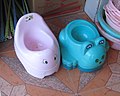 Toilet training


.jpg)
.jpg)
Medical Disclaimer: WikiMD is for informational purposes only and is not a substitute for professional medical advice. Content may be inaccurate or outdated and should not be used for diagnosis or treatment. Always consult your healthcare provider for medical decisions. Verify information with trusted sources such as CDC.gov and NIH.gov. By using this site, you agree that WikiMD is not liable for any outcomes related to its content. See full disclaimer.
Credits:Most images are courtesy of Wikimedia commons, and templates, categories Wikipedia, licensed under CC BY SA or similar.
Translate this page: - East Asian
中文,
日本,
한국어,
South Asian
हिन्दी,
தமிழ்,
తెలుగు,
Urdu,
ಕನ್ನಡ,
Southeast Asian
Indonesian,
Vietnamese,
Thai,
မြန်မာဘာသာ,
বাংলা
European
español,
Deutsch,
français,
Greek,
português do Brasil,
polski,
română,
русский,
Nederlands,
norsk,
svenska,
suomi,
Italian
Middle Eastern & African
عربى,
Turkish,
Persian,
Hebrew,
Afrikaans,
isiZulu,
Kiswahili,
Other
Bulgarian,
Hungarian,
Czech,
Swedish,
മലയാളം,
मराठी,
ਪੰਜਾਬੀ,
ગુજરાતી,
Portuguese,
Ukrainian

