Testosterone propionate
Testosterone Propionate is an ester of the primary male sex hormone, testosterone. It is one of the most commonly used anabolic steroids by athletes and bodybuilders. Testosterone propionate is often preferred for its easy control over the side effects and its quick action.
Chemical Structure[edit]
Testosterone propionate is a prodrug of testosterone and is an ester. It is synthesized by the reaction of testosterone with propionic acid. The esterification process makes the testosterone more lipophilic, which allows it to be released slowly into the bloodstream after injection.
Pharmacology[edit]
Testosterone propionate is a synthetic derivative of the endogenous androgen testosterone. It is designed to provide a fast yet extended release of testosterone. The propionate ester is suggested to develop a circulation peak within 24-36 hours after injection, and the testosterone hormone is released for up to a few days afterward.
Medical Uses[edit]
Testosterone propionate is used in medicine to treat males who have low or no testosterone production. It is also used to treat certain types of breast cancer in women.
Side Effects[edit]
Like all anabolic steroids, testosterone propionate has potential side effects. These can include acne, hair loss, increased body or facial hair, voice deepening, and changes in sexual desire. More serious side effects can include liver disease, mental/mood changes, and unusual tiredness.
Legal Status[edit]
In many countries, testosterone propionate is regulated as a controlled substance under the Anabolic Steroids Control Act. It is also listed in the World Anti-Doping Agency's list of prohibited substances.
See Also[edit]

 | This medical article is a stub. You can help WikiMD by expanding the page. |

 | This endocrinology article is a stub. You can help WikiMD by expanding the page. |
-
 Chemical structure of Testosterone propionate
 -
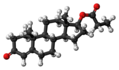 Ball-and-stick model of Testosterone propionate


Medical Disclaimer: WikiMD is for informational purposes only and is not a substitute for professional medical advice. Content may be inaccurate or outdated and should not be used for diagnosis or treatment. Always consult your healthcare provider for medical decisions. Verify information with trusted sources such as CDC.gov and NIH.gov. By using this site, you agree that WikiMD is not liable for any outcomes related to its content. See full disclaimer.
Credits:Most images are courtesy of Wikimedia commons, and templates, categories Wikipedia, licensed under CC BY SA or similar.
Translate this page: - East Asian
中文,
日本,
한국어,
South Asian
हिन्दी,
தமிழ்,
తెలుగు,
Urdu,
ಕನ್ನಡ,
Southeast Asian
Indonesian,
Vietnamese,
Thai,
မြန်မာဘာသာ,
বাংলা
European
español,
Deutsch,
français,
Greek,
português do Brasil,
polski,
română,
русский,
Nederlands,
norsk,
svenska,
suomi,
Italian
Middle Eastern & African
عربى,
Turkish,
Persian,
Hebrew,
Afrikaans,
isiZulu,
Kiswahili,
Other
Bulgarian,
Hungarian,
Czech,
Swedish,
മലയാളം,
मराठी,
ਪੰਜਾਬੀ,
ગુજરાતી,
Portuguese,
Ukrainian
