Economics
Economics is a social science that studies the production, distribution, and consumption of goods and services. It focuses on the behaviour and interactions of economic agents and how economies work.
Overview[edit]
Economists analyze the production, distribution, and consumption of goods and services; they study the behaviour and interactions of economic agents, both individually and collectively, and they research the public policies that can both limit and enhance these activities. Economists can work in both the public and private sectors. They may spend their days using complex mathematical models to predict future economic trends, or they may spend their time advising businesses and governments on economic policy.
Microeconomics[edit]
Microeconomics is a branch of economics that studies the behavior of individuals and firms in making decisions regarding the allocation of scarce resources and the interactions among these individuals and firms. This includes the study of markets, where goods and services are bought and sold, and the behavior of consumers and producers within those markets.
Macroeconomics[edit]
Macroeconomics, on the other hand, involves the "big picture" of economics. It looks at aggregate economic phenomena, like the factors that cause economic upturns and downturns, the causes of unemployment and inflation, and the effects of government spending and taxation policies.
Economic Systems[edit]
Economic Systems are the means by which societies or governments organize and distribute available resources, services, and goods across a geographic region or country. They regulate the factors of production, including labor, capital, and land.
Economic Policy[edit]
Economic Policy refers to the actions that governments take in the economic field. It covers the systems for setting levels of taxation, government budgets, the money supply and interest rates as well as the labor market, national ownership, and many other areas of government interventions into the economy.
Economic Theories[edit]
There are several Economic Theories that have been proposed over the years, including classical economics, Keynesian economics, and modern economic theory. Each of these theories has its own set of assumptions and methods, and they each have their strengths and weaknesses.
See Also[edit]
References[edit]

This WikiMD article can only be edited by registered and verified editors. You can log in or register.
-
 Seaport by Claude Lorrain
 -
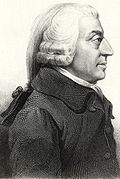 Adam Smith
 -
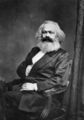 Karl Marx
 -
 Lydia Lopokova and John Maynard Keynes
 -
 Ballard Farmers' Market - vegetables
 -
 São Paulo Stock Exchange
 -
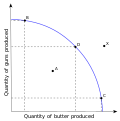 Production Possibilities Frontier Curve
 -
 Late Medieval Trade Routes
 -
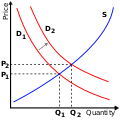 Supply and Demand - Right Shift in Demand
 -
 Smokestack in Detroit
 -
 Field Trip: Water Sampling
 -
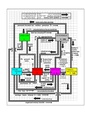 Diagram of Functional Macroeconomic System


Medical Disclaimer: WikiMD is for informational purposes only and is not a substitute for professional medical advice. Content may be inaccurate or outdated and should not be used for diagnosis or treatment. Always consult your healthcare provider for medical decisions. Verify information with trusted sources such as CDC.gov and NIH.gov. By using this site, you agree that WikiMD is not liable for any outcomes related to its content. See full disclaimer.
Credits:Most images are courtesy of Wikimedia commons, and templates, categories Wikipedia, licensed under CC BY SA or similar.
Translate page: - East Asian
中文,
日本,
한국어,
South Asian
हिन्दी,
தமிழ்,
తెలుగు,
Urdu,
ಕನ್ನಡ,
Southeast Asian
Indonesian,
Vietnamese,
Thai,
မြန်မာဘာသာ,
বাংলা
European
español,
Deutsch,
français,
Greek,
português do Brasil,
polski,
română,
русский,
Nederlands,
norsk,
svenska,
suomi,
Italian
Middle Eastern & African
عربى,
Turkish,
Persian,
Hebrew,
Afrikaans,
isiZulu,
Kiswahili,
Other
Bulgarian,
Hungarian,
Czech,
Swedish,
മലയാളം,
मराठी,
ਪੰਜਾਬੀ,
ગુજરાતી,
Portuguese,
Ukrainian

