Social inequality
Social inequality refers to disparities in the distribution of economic assets and income as well as between the overall quality and luxury of each person's existence. It also refers to inequality among individuals and groups that are socially defined, such as that in health, education, and social prestige.
Causes of Social Inequality[edit]
Social inequality is caused by a variety of factors including income disparity, gender, socioeconomic status, and age. Some argue that discrimination and prejudice perpetuate social inequality; others believe that inequality is a result of more complex factors such as the structure of our society and the influence of social institutions.
Income Disparity[edit]
Income disparity is a major cause of social inequality. This is the unequal distribution of household or individual income across the various participants in an economy. It is often presented as the percentage of income related to a percentage of the population.
Gender[edit]
Gender is another cause of social inequality. Women often face discrimination that men do not, such as lower wages, less job opportunities, and unfair treatment in the workplace.
Socioeconomic Status[edit]
Socioeconomic status is a measure of an individual's or family's economic and social position in relation to others, based on income, education, and occupation. It is often associated with social inequality, as those in higher socioeconomic classes tend to have more opportunities and resources.
Age[edit]
Age is also a factor in social inequality. Older adults often face ageism, or discrimination based on age. This can lead to fewer job opportunities, lower income, and less social support.
Effects of Social Inequality[edit]
Social inequality can have a number of negative effects on society, including increased crime rates, poor health outcomes, and decreased economic growth.
Crime Rates[edit]
High levels of social inequality can lead to increased crime rates. This is because those who are disadvantaged often turn to crime as a means of survival.
Health Outcomes[edit]
Social inequality can also lead to poor health outcomes. Those in lower socioeconomic classes often have less access to healthcare and are more likely to experience health problems.
Economic Growth[edit]
Finally, social inequality can hinder economic growth. When wealth is concentrated in the hands of a few, the majority of people are left with less money to spend, which can slow economic growth.
See Also[edit]
References[edit]

This WikiMD article can only be edited by registered and verified editors. You can log in or register.
-
 Social inequality
 -
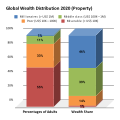 Social inequality
 -
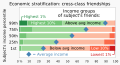 Social inequality
 -
 Social inequality
 -
 Social inequality

.svg)


Advertise on WikiMD — 81,000+ full articles, ~900,000 total pages, ~250 million page views. Global reach, limited time promotional rates from $1/page/day. Learn more · View stats

Translate page: - East Asian
中文,
日本,
한국어,
South Asian
हिन्दी,
தமிழ்,
తెలుగు,
Urdu,
ಕನ್ನಡ,
Southeast Asian
Indonesian,
Vietnamese,
Thai,
မြန်မာဘာသာ,
বাংলা
European
español,
Deutsch,
français,
Greek,
português do Brasil,
polski,
română,
русский,
Nederlands,
norsk,
svenska,
suomi,
Italian
Middle Eastern & African
عربى,
Turkish,
Persian,
Hebrew,
Afrikaans,
isiZulu,
Kiswahili,
Other
Bulgarian,
Hungarian,
Czech,
Swedish,
മലയാളം,
मराठी,
ਪੰਜਾਬੀ,
ગુજરાતી,
Portuguese,
Ukrainian
About WikiMD • Contact • Disclaimer • Privacy • Copyright • Site statistics
Some content and images may originate from Wikimedia Commons or Wikipedia and remain subject to their stated licenses. Unless otherwise noted, eligible WikiMD content is available under CC BY-SA 4.0.
WikiMD Wellnesspedia — Free health & wellness information for patients, students, and health professionals.

