Serenoa
Serenoa, also known as saw palmetto, is a genus of the palm family (Arecaceae). It is a small palm, growing to a maximum height of around 7–10 ft (2.1–3.0 m). Its trunk grows in a creeping pattern, often along the ground, and it has a crown of leaves with sharp, saw-like teeth or spines on the petioles.
Description[edit]
The Serenoa genus is monotypic, with only one species, Serenoa repens. The plant is a hardy and versatile species, able to grow in a variety of environments and climates. It is native to the southeastern United States, most commonly along the south Atlantic and Gulf Coastal plains, but also as far inland as southern Arkansas.
Uses[edit]
The fruit of Serenoa repens is used in herbal medicine. It is rich in fatty acids and phytosterols. It has been used in traditional, eclectic, and alternative medicine for a variety of indications, most notably benign prostatic hyperplasia (BPH).
Research[edit]
Research into the effectiveness of Serenoa as a treatment for BPH has been inconclusive. Some studies have found it to be effective, while others have not. The American Urological Association and the National Institutes of Health state that the extracts from Serenoa are well-tolerated by users, but they are "no more effective than placebo" in treating symptoms of BPH.
See also[edit]
References[edit]
External links[edit]

This WikiMD article can only be edited by registered and verified editors. You can log in or register.
Serenoa[edit]
-
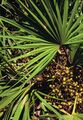 Serenoa repens USDA1
 -
 Serenora Repens Habitat Punta Gorda
 -
 Saw palmetto (Serenoa repens) in Manatee Springs State Park
 -
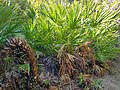 Windy Serenoa Repens Trunks
 -
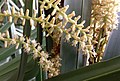 Serenoa repens
 -
 Silver Saw Palmetto Clump


_in_Manatee_Springs_State_Park.jpg)


Medical Disclaimer: WikiMD is for informational purposes only and is not a substitute for professional medical advice. Content may be inaccurate or outdated and should not be used for diagnosis or treatment. Always consult your healthcare provider for medical decisions. Verify information with trusted sources such as CDC.gov and NIH.gov. By using this site, you agree that WikiMD is not liable for any outcomes related to its content. See full disclaimer.
Credits:Most images are courtesy of Wikimedia commons, and templates, categories Wikipedia, licensed under CC BY SA or similar.
Translate page: - East Asian
中文,
日本,
한국어,
South Asian
हिन्दी,
தமிழ்,
తెలుగు,
Urdu,
ಕನ್ನಡ,
Southeast Asian
Indonesian,
Vietnamese,
Thai,
မြန်မာဘာသာ,
বাংলা
European
español,
Deutsch,
français,
Greek,
português do Brasil,
polski,
română,
русский,
Nederlands,
norsk,
svenska,
suomi,
Italian
Middle Eastern & African
عربى,
Turkish,
Persian,
Hebrew,
Afrikaans,
isiZulu,
Kiswahili,
Other
Bulgarian,
Hungarian,
Czech,
Swedish,
മലയാളം,
मराठी,
ਪੰਜਾਬੀ,
ગુજરાતી,
Portuguese,
Ukrainian

