Roasting
Roasting is a cooking method that uses dry heat where hot air covers the food, cooking it evenly on all sides with temperatures of at least 150 °C (300 °F) from an open flame, oven, or other heat source. Roasting can enhance the flavor through caramelization and Maillard reaction. It can be applied to a wide variety of types of food, from vegetables and grains, to meat and poultry.
History[edit]
The first ovens were used by the ancient Greeks for making bread and other baked goods. By the 18th century, ovens were common in larger households, and roasting was a common cooking method. The Victorian era saw the creation of the modern kitchen, with the oven becoming a standard feature.
Methods[edit]
Roasting can be performed at different temperatures. High-temperature roasting can brown the surface of the food and seal in the juices, but it can also result in a drier product. Low-temperature roasting can result in a more moist and tender product, but it can take longer to cook.
Equipment[edit]
Roasting is often performed in an oven, using a roasting pan with a rack. The rack allows the heat to circulate around the food. Other equipment can include a roasting spit, which is used for roasting large pieces of meat.
See also[edit]

This WikiMD article can only be edited by registered and verified editors. You can log in or register.
-
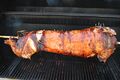 Roasting
 -
Roasting
-
Roasting
-
Roasting
-
Roasting
-
Roasting
-
Roasting
-
Roasting

Advertise on WikiMD — 81,000+ full articles, ~900,000 total pages, ~250 million page views. Global reach, limited time promotional rates from $1/page/day. Learn more · View stats

Translate page: - East Asian
中文,
日本,
한국어,
South Asian
हिन्दी,
தமிழ்,
తెలుగు,
Urdu,
ಕನ್ನಡ,
Southeast Asian
Indonesian,
Vietnamese,
Thai,
မြန်မာဘာသာ,
বাংলা
European
español,
Deutsch,
français,
Greek,
português do Brasil,
polski,
română,
русский,
Nederlands,
norsk,
svenska,
suomi,
Italian
Middle Eastern & African
عربى,
Turkish,
Persian,
Hebrew,
Afrikaans,
isiZulu,
Kiswahili,
Other
Bulgarian,
Hungarian,
Czech,
Swedish,
മലയാളം,
मराठी,
ਪੰਜਾਬੀ,
ગુજરાતી,
Portuguese,
Ukrainian
About WikiMD • Contact • Disclaimer • Privacy • Copyright • Site statistics
Some content and images may originate from Wikimedia Commons or Wikipedia and remain subject to their stated licenses. Unless otherwise noted, eligible WikiMD content is available under CC BY-SA 4.0.
WikiMD Wellnesspedia — Free health & wellness information for patients, students, and health professionals.


.jpg)

