Posterior compartment of the forearm
Posterior Compartment of the Forearm[edit]
The posterior compartment of the forearm is one of the two compartments in the forearm, along with the anterior compartment. It is located on the back side of the forearm and contains several important muscles, nerves, and blood vessels. Understanding the anatomy and function of this compartment is crucial for medical professionals and individuals interested in human anatomy.
Muscles[edit]
The posterior compartment of the forearm contains several muscles that are responsible for various movements of the wrist, hand, and fingers. These muscles include:
1. Extensor Carpi Ulnaris: This muscle originates from the lateral epicondyle of the humerus and inserts into the base of the fifth metacarpal bone. It is responsible for extending and adducting the wrist.
2. Extensor Digiti Minimi: This muscle originates from the common extensor tendon and inserts into the base of the fifth proximal phalanx. It extends the little finger at the metacarpophalangeal joint.
3. Extensor Digitorum: This muscle originates from the lateral epicondyle of the humerus and inserts into the distal phalanges of the fingers. It extends the fingers at the metacarpophalangeal, proximal interphalangeal, and distal interphalangeal joints.
4. Extensor Pollicis Longus: This muscle originates from the posterior surface of the ulna and inserts into the base of the distal phalanx of the thumb. It extends the thumb at the interphalangeal joint.
5. Abductor Pollicis Longus: This muscle originates from the posterior surface of the ulna and inserts into the base of the first metacarpal bone. It abducts and extends the thumb at the carpometacarpal joint.
Nerves[edit]
The posterior compartment of the forearm is innervated by the posterior interosseous nerve, which is a branch of the radial nerve. This nerve provides motor innervation to the muscles in the compartment, allowing for their contraction and movement. It also provides sensory innervation to the skin on the back of the forearm.
Blood Vessels[edit]
The blood supply to the posterior compartment of the forearm is primarily through the posterior interosseous artery, which is a branch of the ulnar artery. This artery provides oxygenated blood to the muscles and other structures in the compartment, ensuring their proper function.
Clinical Significance[edit]
Injuries or conditions affecting the muscles, nerves, or blood vessels in the posterior compartment of the forearm can lead to various symptoms and functional impairments. Common conditions include tendonitis, nerve entrapment syndromes, and vascular disorders. Proper diagnosis and treatment are essential for restoring normal function and relieving symptoms.
References[edit]
Posterior_compartment_of_the_forearm[edit]
-
Superficial muscles of the posterior compartment of the forearm
-
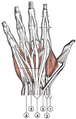 Numbered wrist extensor compartments
 -
Tennis elbow
-
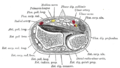 Muscles of the posterior compartment of the forearm
 -
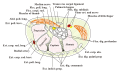 Carpal tunnel
.PNG)


Medical Disclaimer: WikiMD is for informational purposes only and is not a substitute for professional medical advice. Content may be inaccurate or outdated and should not be used for diagnosis or treatment. Always consult your healthcare provider for medical decisions. Verify information with trusted sources such as CDC.gov and NIH.gov. By using this site, you agree that WikiMD is not liable for any outcomes related to its content. See full disclaimer.
Credits:Most images are courtesy of Wikimedia commons, and templates, categories Wikipedia, licensed under CC BY SA or similar.
Translate this page: - East Asian
中文,
日本,
한국어,
South Asian
हिन्दी,
தமிழ்,
తెలుగు,
Urdu,
ಕನ್ನಡ,
Southeast Asian
Indonesian,
Vietnamese,
Thai,
မြန်မာဘာသာ,
বাংলা
European
español,
Deutsch,
français,
Greek,
português do Brasil,
polski,
română,
русский,
Nederlands,
norsk,
svenska,
suomi,
Italian
Middle Eastern & African
عربى,
Turkish,
Persian,
Hebrew,
Afrikaans,
isiZulu,
Kiswahili,
Other
Bulgarian,
Hungarian,
Czech,
Swedish,
മലയാളം,
मराठी,
ਪੰਜਾਬੀ,
ગુજરાતી,
Portuguese,
Ukrainian


