Poison
Poison is a substance that can cause harm or death to organisms, usually by chemical reaction or other activity on the molecular scale, when a sufficient quantity is absorbed by an organism. The fields of medicine (particularly veterinary) and zoology often distinguish a poison from a toxin, and from a venom. Toxins are poisons produced by organisms in nature, and venoms are toxins injected by a bite or sting (this is exclusive to animals). The difference between venom and other poisons is the delivery method. Industry, agriculture, and other sectors use poisons for reasons other than their toxicity. Pesticides are one group of substances whose toxicity to various insects and other animals deemed to be pests (e.g., rats and cockroaches) is their prime purpose.
Classification[edit]
Poisons are classified in relation to the period of time required for them to inflict harm on the body, the type of harm they inflict, and the manner in which they are introduced to the body.
By time to effect[edit]
- Immediate poisons: These are poisons that show their effect immediately after their administration. Examples include cyanide and strychnine.
- Latent poisons: These are poisons that show their effect after a certain period of time. Examples include mercury and lead.
By effect[edit]
- Corrosive poisons: These are poisons that cause damage to the tissues at the point of contact. Examples include acids and alkalis.
- Systemic poisons: These are poisons that affect the entire body or a specific organ. Examples include arsenic and cyanide.
By route of entry[edit]
- Ingested poisons: These are poisons that are taken orally. Examples include cyanide and arsenic.
- Inhaled poisons: These are poisons that are inhaled. Examples include carbon monoxide and chlorine gas.
- Contact poisons: These are poisons that cause harm upon contact with the skin. Examples include poison ivy and poison oak.
Treatment[edit]
The treatment for poisoning depends on the poison consumed. In some cases, the individual may be advised to induce vomiting, while in others, they may be advised to consume activated charcoal to absorb the poison. In severe cases, the individual may require hospitalization.
See also[edit]

This WikiMD article can only be edited by registered and verified editors. You can log in or register.
-
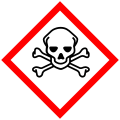 Skull and crossbones hazard symbol
 -
 Cassava leaves in mortar and pestle
 -
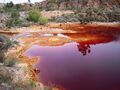 Red lagoon at Losal Mine
 -
 World map of poisonings deaths per million persons (WHO 2012)
 -
 World map of poisonings DALY (WHO 2004)
 -
 Poisoning of Queen Bona by Jan Matejko


Sponsored Health Resource

W8MD Weight Loss, Sleep & MedSpa
Looking for physician-supervised weight loss, semaglutide, tirzepatide, or GLP-1 receptor agonist options? W8MD helps eligible patients in New York City, Brooklyn, New Jersey, Connecticut, Pennsylvania, Delaware, and greater Philadelphia with medical weight loss, sleep medicine, and long-term maintenance support.
GLP-1 specials: Affordable GLP-1 injections NYC and Philadelphia starting from $29.99/week and up for semaglutide with insurance accepted for qualifying visits, and $45/week and up for tirzepatide with insurance accepted for qualifying visits. Self-pay options start from $59.99/week and up for semaglutide and $69.99/week and up for tirzepatide.
Medical weight loss NYC | Affordable GLP-1 injections NYC | Budget GLP-1 weight loss shots Philadelphia | New Jersey medical weight loss | NYC medical weight loss | Philadelphia medical weight loss | Sleep clinic NYC | W8MD's Philadelphia GLP-1 doctor | Weight loss prescriptions NYC
Book a W8MD appointment · View GLP-1 specials
Paid promotional message. Eligibility, pricing, insurance coverage, medication availability, and results vary. Medical evaluation required.

Medical Disclaimer: WikiMD is for informational purposes only and is not a substitute for professional medical advice. Content may be inaccurate or outdated and should not be used for diagnosis or treatment. Always consult your healthcare provider for medical decisions. Verify information with trusted sources such as CDC.gov and NIH.gov. By using this site, you agree that WikiMD is not liable for any outcomes related to its content. See full disclaimer.
Credits:Most images are courtesy of Wikimedia commons, and templates, categories Wikipedia, licensed under CC BY SA or similar.
Translate page: - East Asian
中文,
日本,
한국어,
South Asian
हिन्दी,
தமிழ்,
తెలుగు,
Urdu,
ಕನ್ನಡ,
Southeast Asian
Indonesian,
Vietnamese,
Thai,
မြန်မာဘာသာ,
বাংলা
European
español,
Deutsch,
français,
Greek,
português do Brasil,
polski,
română,
русский,
Nederlands,
norsk,
svenska,
suomi,
Italian
Middle Eastern & African
عربى,
Turkish,
Persian,
Hebrew,
Afrikaans,
isiZulu,
Kiswahili,
Other
Bulgarian,
Hungarian,
Czech,
Swedish,
മലയാളം,
मराठी,
ਪੰਜਾਬੀ,
ગુજરાતી,
Portuguese,
Ukrainian

