Egg decorating in Slavic culture
Egg decorating holds a significant place in the cultural traditions of Slavic countries. This art form, known as pysanky, has been practiced for centuries and is deeply rooted in the customs and beliefs of the Slavic people. Pysanky eggs are intricately decorated using a wax-resist method, resulting in beautiful and symbolic designs. In this article, we will explore the history, techniques, and symbolism behind egg decorating in Slavic culture.
History[edit]
The tradition of egg decorating in Slavic culture dates back to ancient times. It is believed to have originated as a pagan ritual associated with the arrival of spring and the celebration of new life. With the spread of Christianity, the practice of decorating eggs took on new meanings and became intertwined with religious beliefs and customs.
Techniques[edit]
The process of creating pysanky eggs involves several intricate techniques. The first step is to carefully empty the contents of the egg through a small hole, preserving the shell. The egg is then cleaned and prepared for decoration.
The design is created using a wax-resist method. A tool called a kistka, which is a small funnel-shaped instrument, is used to apply melted beeswax onto the eggshell. The wax is applied in layers, with each layer covering the areas that should remain the color of the eggshell.
After applying the wax, the egg is dipped into a dye bath, typically starting with the lightest color. The areas covered in wax resist the dye, allowing the desired design to emerge. The process is repeated, with additional layers of wax and different colors of dye, until the desired design is achieved.
Once the final layer of dye is applied, the wax is carefully removed by heating the egg over a flame. This reveals the vibrant and intricate design created on the eggshell. The egg is then coated with a protective varnish to preserve the artwork.
Symbolism[edit]
The designs on pysanky eggs hold deep symbolic meanings in Slavic culture. Each element and color used in the design carries its own significance. For example, the sun is a common motif, symbolizing life, warmth, and fertility. Other common symbols include flowers, birds, and geometric patterns, each representing different aspects of nature and spirituality.
The colors used in pysanky eggs also have specific meanings. White represents purity and innocence, while red symbolizes passion and love. Yellow is associated with fertility and wealth, while green represents spring and new beginnings. Black is often used to ward off evil spirits, and blue is a symbol of good health and tranquility.
Cultural Significance[edit]
Egg decorating in Slavic culture is not only a form of artistic expression but also a way to connect with ancestral traditions and beliefs. Pysanky eggs are often exchanged as gifts during special occasions, such as Easter or weddings, symbolizing good luck, protection, and prosperity.
The art of pysanky has been passed down through generations, with families teaching their children the techniques and symbolism behind this ancient craft. Today, there are also workshops and classes available for those interested in learning the art of egg decorating in Slavic culture.
See Also[edit]
- Pysanka - A specific type of decorated egg in Ukrainian culture
- Easter traditions in Slavic countries - Other customs and traditions associated with Easter in Slavic culture
References[edit]
Egg_decorating_in_Slavic_culture[edit]
-
 Colorful Easter eggs on a doily
 -
 Traditional Easter eggs in Croatia
 -
 Ukrainian folk pysanky
 -
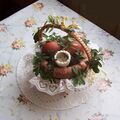 Swiecone 2006
 -
 Ukrainian Krapanka
 -
 Drapanka
 -
 Bukovynian Maliovanka
 -
 Nakleyanka


Medical Disclaimer: WikiMD is for informational purposes only and is not a substitute for professional medical advice. Content may be inaccurate or outdated and should not be used for diagnosis or treatment. Always consult your healthcare provider for medical decisions. Verify information with trusted sources such as CDC.gov and NIH.gov. By using this site, you agree that WikiMD is not liable for any outcomes related to its content. See full disclaimer.
Credits:Most images are courtesy of Wikimedia commons, and templates, categories Wikipedia, licensed under CC BY SA or similar.
Translate page: - East Asian
中文,
日本,
한국어,
South Asian
हिन्दी,
தமிழ்,
తెలుగు,
Urdu,
ಕನ್ನಡ,
Southeast Asian
Indonesian,
Vietnamese,
Thai,
မြန်မာဘာသာ,
বাংলা
European
español,
Deutsch,
français,
Greek,
português do Brasil,
polski,
română,
русский,
Nederlands,
norsk,
svenska,
suomi,
Italian
Middle Eastern & African
عربى,
Turkish,
Persian,
Hebrew,
Afrikaans,
isiZulu,
Kiswahili,
Other
Bulgarian,
Hungarian,
Czech,
Swedish,
മലയാളം,
मराठी,
ਪੰਜਾਬੀ,
ગુજરાતી,
Portuguese,
Ukrainian

