Phenomenon
Phenomenon is a term that refers to an observable event or, more generally, to anything that can be perceived by the senses. The term comes from the Greek word phainomenon, which means "that which appears or is seen." In philosophy, phenomena are the objects of perception, as opposed to noumena, which are objects as they are in themselves, independent of observation.
Types of Phenomena[edit]
Phenomena can be categorized in various ways. Some of the main types include:
- Natural Phenomena: These are events or processes that occur in nature, without human intervention. Examples include weather events like rain and thunderstorms, astronomical events like eclipses and meteor showers, and biological processes like photosynthesis and evolution.
- Social Phenomena: These are events or processes that occur within societies or social groups. Examples include social movements, trends, and fads.
- Psychological Phenomena: These are events or processes that occur within the mind. Examples include perception, cognition, emotion, and behavior.
- Physical Phenomena: These are events or processes that occur within the physical world. Examples include the laws of physics, chemical reactions, and geological processes.
Philosophical Views[edit]
Different philosophical traditions have different views on phenomena. In phenomenology, for example, phenomena are the basic units of human experience. In Kantian philosophy, phenomena are the objects of human perception, as opposed to noumena, which are things as they are in themselves, independent of human perception.
See Also[edit]
References[edit]
<references />
 | This medical article is a stub. You can help WikiMD by expanding the page. |
-
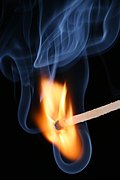 A lit matchstick with a bright flame.
 -
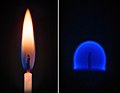 A fire experiment conducted in space.
 -
 A cloud chamber showing particle tracks.
 -
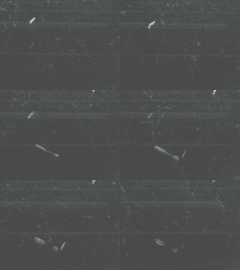 An animated cloud chamber with visible particle paths.


Medical Disclaimer: WikiMD is for informational purposes only and is not a substitute for professional medical advice. Content may be inaccurate or outdated and should not be used for diagnosis or treatment. Always consult your healthcare provider for medical decisions. Verify information with trusted sources such as CDC.gov and NIH.gov. By using this site, you agree that WikiMD is not liable for any outcomes related to its content. See full disclaimer.
Credits:Most images are courtesy of Wikimedia commons, and templates, categories Wikipedia, licensed under CC BY SA or similar.
Translate this page: - East Asian
中文,
日本,
한국어,
South Asian
हिन्दी,
தமிழ்,
తెలుగు,
Urdu,
ಕನ್ನಡ,
Southeast Asian
Indonesian,
Vietnamese,
Thai,
မြန်မာဘာသာ,
বাংলা
European
español,
Deutsch,
français,
Greek,
português do Brasil,
polski,
română,
русский,
Nederlands,
norsk,
svenska,
suomi,
Italian
Middle Eastern & African
عربى,
Turkish,
Persian,
Hebrew,
Afrikaans,
isiZulu,
Kiswahili,
Other
Bulgarian,
Hungarian,
Czech,
Swedish,
മലയാളം,
मराठी,
ਪੰਜਾਬੀ,
ગુજરાતી,
Portuguese,
Ukrainian
