Corpus cavernosum penis
The Corpus Cavernosum Penis is one of the integral parts of the male reproductive system. It is a pair of sponge-like regions of erectile tissue, which contain most of the blood in the penis during an erection.
Etymology[edit]
The term "Corpus Cavernosum Penis" is derived from Latin, where "corpus" means body, "cavernosum" means cavernous or full of cavities, and "penis" refers to the male genital organ.
Anatomy[edit]
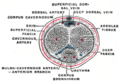
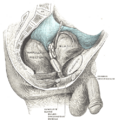
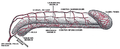
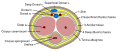
The Corpus Cavernosum Penis is located along the penis, with two parts lying side by side and extending from the pelvic bone to the head of the penis. These parts are surrounded by a membrane called the tunica albuginea. The corpus cavernosum also contains the urethra, which is the tube that carries urine and semen out of the body.
Physiology[edit]
During sexual arousal, the brain releases a hormone that causes the corpus cavernosum to fill with blood, leading to an erection. The blood fills the corpus cavernosum and expands it, causing the penis to become rigid. After ejaculation or when the sexual arousal subsides, the blood drains out of the corpus cavernosum, and the penis returns to its flaccid state.
Related Terms[edit]
- Erection: The state of the penis when it is filled with blood and is rigid.
- Erectile Dysfunction: A condition where a man is unable to achieve or maintain an erection.
- Priapism: A painful, prolonged erection that can cause damage to the penis.
See Also[edit]
- Corpus Spongiosum: Another part of the penis that also fills with blood during an erection.
- Penis: The male genital organ that contains the corpus cavernosum.

This WikiMD article can only be edited by registered and verified editors. You can log in or register.
-
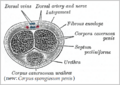 Corpus cavernosum penis
 -
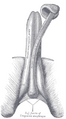 Corpus cavernosum penis
 -
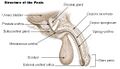 Corpus cavernosum penis
 -
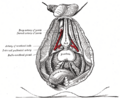 Corpus cavernosum penis
 -
 Corpus cavernosum penis
 -
 Corpus cavernosum penis
 -
 Corpus cavernosum penis
 -
 Corpus cavernosum penis
 -
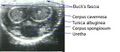 Corpus cavernosum penis


Medical Disclaimer: WikiMD is for informational purposes only and is not a substitute for professional medical advice. Content may be inaccurate or outdated and should not be used for diagnosis or treatment. Always consult your healthcare provider for medical decisions. Verify information with trusted sources such as CDC.gov and NIH.gov. By using this site, you agree that WikiMD is not liable for any outcomes related to its content. See full disclaimer.
Credits:Most images are courtesy of Wikimedia commons, and templates, categories Wikipedia, licensed under CC BY SA or similar.
Translate page: - East Asian
中文,
日本,
한국어,
South Asian
हिन्दी,
தமிழ்,
తెలుగు,
Urdu,
ಕನ್ನಡ,
Southeast Asian
Indonesian,
Vietnamese,
Thai,
မြန်မာဘာသာ,
বাংলা
European
español,
Deutsch,
français,
Greek,
português do Brasil,
polski,
română,
русский,
Nederlands,
norsk,
svenska,
suomi,
Italian
Middle Eastern & African
عربى,
Turkish,
Persian,
Hebrew,
Afrikaans,
isiZulu,
Kiswahili,
Other
Bulgarian,
Hungarian,
Czech,
Swedish,
മലയാളം,
मराठी,
ਪੰਜਾਬੀ,
ગુજરાતી,
Portuguese,
Ukrainian

