Copper IUD
Copper IUD is a type of Intrauterine device that is used for birth control. It is a small, T-shaped device that is inserted into the uterus by a healthcare provider. The Copper IUD releases copper into the uterus, which works to prevent pregnancy by interfering with sperm movement, egg fertilization, and possibly the implantation of a fertilized egg.
Mechanism of Action[edit]
The Copper IUD works primarily by preventing sperm from reaching and fertilizing an egg. The copper released by the IUD is toxic to sperm, impairing their ability to swim and survive in the uterus. The IUD also changes the lining of the uterus, making it less likely that a fertilized egg can attach to it.
Effectiveness[edit]
The Copper IUD is one of the most effective forms of birth control available. It has a failure rate of less than 1%, meaning that less than 1 out of 100 women will become pregnant in a year of typical use. The Copper IUD is also a long-lasting form of birth control, providing up to 10 years of protection against pregnancy.
Side Effects[edit]
Some women may experience side effects with the Copper IUD, including heavier or longer periods, spotting between periods, and cramping. These side effects are usually most noticeable in the first few months after the IUD is inserted and often decrease over time.
Advantages and Disadvantages[edit]
The Copper IUD has several advantages, including its long-lasting effectiveness and the fact that it does not contain hormones. However, it also has some disadvantages, such as the potential for side effects and the need for a healthcare provider to insert and remove the device.
See Also[edit]
References[edit]

This WikiMD article can only be edited by registered and verified editors. You can log in or register.
-
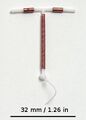 Copper IUD with scale for size reference
 -
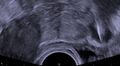 Perforated IUD
 -
Ultrasonography of IUD with copper
-
Different types of copper IUDs: Multiload, Gynefix, Paragard
-
GyneFix 200 copper chain IUD
-
Diagram of an IUD


Sponsored Health Resource

W8MD Weight Loss, Sleep & MedSpa
Looking for physician-supervised weight loss, semaglutide, tirzepatide, or GLP-1 receptor agonist options? W8MD helps eligible patients in New York City, Brooklyn, New Jersey, Connecticut, Pennsylvania, Delaware, and greater Philadelphia with medical weight loss, sleep medicine, and long-term maintenance support.
GLP-1 specials: Affordable GLP-1 injections NYC and Philadelphia starting from $29.99/week and up for semaglutide with insurance accepted for qualifying visits, and $45/week and up for tirzepatide with insurance accepted for qualifying visits. Self-pay options start from $59.99/week and up for semaglutide and $69.99/week and up for tirzepatide.
- Medical weight loss NYC
- Affordable GLP-1 injections NYC
- Budget GLP-1 weight loss shots Philadelphia
- New Jersey medical weight loss
- NYC medical weight loss blog
- Philadelphia weight loss blog
- Sleep medicine and sleep apnea services
- W8MD MedSpa and wellness
Book a W8MD appointment · View GLP-1 specials
Paid promotional message. Eligibility, pricing, insurance coverage, medication availability, and results vary. Medical evaluation required.

Medical Disclaimer: WikiMD is for informational purposes only and is not a substitute for professional medical advice. Content may be inaccurate or outdated and should not be used for diagnosis or treatment. Always consult your healthcare provider for medical decisions. Verify information with trusted sources such as CDC.gov and NIH.gov. By using this site, you agree that WikiMD is not liable for any outcomes related to its content. See full disclaimer.
Credits:Most images are courtesy of Wikimedia commons, and templates, categories Wikipedia, licensed under CC BY SA or similar.
Translate page: - East Asian
中文,
日本,
한국어,
South Asian
हिन्दी,
தமிழ்,
తెలుగు,
Urdu,
ಕನ್ನಡ,
Southeast Asian
Indonesian,
Vietnamese,
Thai,
မြန်မာဘာသာ,
বাংলা
European
español,
Deutsch,
français,
Greek,
português do Brasil,
polski,
română,
русский,
Nederlands,
norsk,
svenska,
suomi,
Italian
Middle Eastern & African
عربى,
Turkish,
Persian,
Hebrew,
Afrikaans,
isiZulu,
Kiswahili,
Other
Bulgarian,
Hungarian,
Czech,
Swedish,
മലയാളം,
मराठी,
ਪੰਜਾਬੀ,
ગુજરાતી,
Portuguese,
Ukrainian


