Paleobotany
Paleobotany, also known as paleophytology, is the branch of paleontology or paleobiology dealing with the recovery and identification of plant remains from geological contexts, and their use for the biological reconstruction of past environments (paleoenvironment), and both the evolutionary history of plants, with a bearing upon the evolution of life in general.
History[edit]
Paleobotany has a long history. The first to study the remains of fossil plants was probably Leonardo da Vinci, during the Renaissance. However, the establishment of paleobotany as a scientific discipline can be attributed to the work of the German scientist Hermann von Meyer, who coined the name "paleobotany" and wrote the book Flora of the Past.
Methods[edit]
Paleobotanists employ a variety of methods to recover and study plant fossils. These include the traditional methods of paleontology, such as field work, collection, and the study of morphology, as well as more specialized techniques, such as palynology, which involves the study of fossil spores and pollen.
Applications[edit]
Paleobotany has important applications in the study of plant evolution, the reconstruction of ancient ecosystems, and climate change. It also has practical applications in fields such as petroleum geology and archaeology.
See also[edit]
References[edit]
External links[edit]
- The Paleobotanical Section of the Botanical Society of America
- UCMP Berkeley's Introduction to Paleobotany

This WikiMD article can only be edited by registered and verified editors. You can log in or register.
Paleobotany[edit]
-
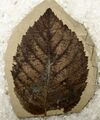 Betula leopoldae fossil leaf
 -
Rhynie chert
-
Gingkoites huttoni
-
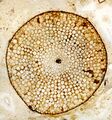 Rhynia stem
 -
Crossotheca nodule
-
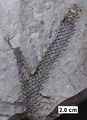 Lycopod axis
 -
Stigmaria from the Pennsylvanian of Ohio
-
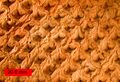 Lepidodendron from Ohio


Sponsored Health Resource

W8MD Weight Loss, Sleep & MedSpa
Looking for physician-supervised weight loss, semaglutide, tirzepatide, or GLP-1 receptor agonist options? W8MD helps eligible patients in New York City, Brooklyn, New Jersey, Connecticut, Pennsylvania, Delaware, and greater Philadelphia with medical weight loss, sleep medicine, and long-term maintenance support.
GLP-1 specials: Affordable GLP-1 injections NYC and Philadelphia starting from $29.99/week and up for semaglutide with insurance accepted for qualifying visits, and $45/week and up for tirzepatide with insurance accepted for qualifying visits. Self-pay options start from $59.99/week and up for semaglutide and $69.99/week and up for tirzepatide.
- Medical weight loss NYC
- Affordable GLP-1 injections NYC
- Budget GLP-1 weight loss shots Philadelphia
- New Jersey medical weight loss
- NYC medical weight loss blog
- Philadelphia weight loss blog
- Sleep medicine and sleep apnea services
- W8MD MedSpa and wellness
Book a W8MD appointment · View GLP-1 specials
Paid promotional message. Eligibility, pricing, insurance coverage, medication availability, and results vary. Medical evaluation required.

Medical Disclaimer: WikiMD is for informational purposes only and is not a substitute for professional medical advice. Content may be inaccurate or outdated and should not be used for diagnosis or treatment. Always consult your healthcare provider for medical decisions. Verify information with trusted sources such as CDC.gov and NIH.gov. By using this site, you agree that WikiMD is not liable for any outcomes related to its content. See full disclaimer.
Credits:Most images are courtesy of Wikimedia commons, and templates, categories Wikipedia, licensed under CC BY SA or similar.
Translate page: - East Asian
中文,
日本,
한국어,
South Asian
हिन्दी,
தமிழ்,
తెలుగు,
Urdu,
ಕನ್ನಡ,
Southeast Asian
Indonesian,
Vietnamese,
Thai,
မြန်မာဘာသာ,
বাংলা
European
español,
Deutsch,
français,
Greek,
português do Brasil,
polski,
română,
русский,
Nederlands,
norsk,
svenska,
suomi,
Italian
Middle Eastern & African
عربى,
Turkish,
Persian,
Hebrew,
Afrikaans,
isiZulu,
Kiswahili,
Other
Bulgarian,
Hungarian,
Czech,
Swedish,
മലയാളം,
मराठी,
ਪੰਜਾਬੀ,
ગુજરાતી,
Portuguese,
Ukrainian


