Optical illusion
Optical illusion is a perception of visual stimuli that differs from reality. Optical illusions can be categorized into three main types: literal illusions, physiological illusions, and cognitive illusions.
Literal illusions[edit]
Literal illusions create images that are different from the objects that make them. These illusions are created by the physical properties of light, such as reflection, refraction, or interference.
Physiological illusions[edit]
Physiological illusions, such as the afterimage or moire pattern, are the effects on the eyes or brain of excessive stimulation of a specific type - brightness, color, size, position, tilt, movement, etc.
Cognitive illusions[edit]
Cognitive illusions are assumed to arise by interaction with assumptions about the world, leading to "unconscious inferences", an idea first suggested in the 19th century by the German physicist and physician Hermann von Helmholtz.
Gallery[edit]
-
 Checker shadow illusion
 -
 Grey square optical illusion proof
 -
 Gregory categorization of illusions 1991
 -
 Mach bands animation
 -
 Neptune's Grotto Organ Player
 -
 Two silhouette profile or a white vase
 -
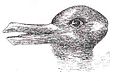 Duck-Rabbit illusion
 -
 Kanizsa triangle
 -
 Vertical–horizontal illusion
 -
 Ponzo illusion
 -
 Gradient optical illusion


See also[edit]
References[edit]
<references />
External links[edit]


Ad. Transform your life with W8MD's
GLP-1 weight loss injections special from $29.99 with insurance
|
WikiMD Medical Encyclopedia |
Medical Disclaimer: WikiMD is for informational purposes only and is not a substitute for professional medical advice. Content may be inaccurate or outdated and should not be used for diagnosis or treatment. Always consult your healthcare provider for medical decisions. Verify information with trusted sources such as CDC.gov and NIH.gov. By using this site, you agree that WikiMD is not liable for any outcomes related to its content. See full disclaimer.
Credits:Most images are courtesy of Wikimedia commons, and templates, categories Wikipedia, licensed under CC BY SA or similar.
Translate this page: - East Asian
中文,
日本,
한국어,
South Asian
हिन्दी,
தமிழ்,
తెలుగు,
Urdu,
ಕನ್ನಡ,
Southeast Asian
Indonesian,
Vietnamese,
Thai,
မြန်မာဘာသာ,
বাংলা
European
español,
Deutsch,
français,
Greek,
português do Brasil,
polski,
română,
русский,
Nederlands,
norsk,
svenska,
suomi,
Italian
Middle Eastern & African
عربى,
Turkish,
Persian,
Hebrew,
Afrikaans,
isiZulu,
Kiswahili,
Other
Bulgarian,
Hungarian,
Czech,
Swedish,
മലയാളം,
मराठी,
ਪੰਜਾਬੀ,
ગુજરાતી,
Portuguese,
Ukrainian
