Nuclear warfare
Nuclear warfare refers to military conflicts and strategies where nuclear weapons are used by the warring factions. It is a type of warfare that has the potential to cause mass destruction and loss of life on an unprecedented scale.
History[edit]
The concept of nuclear warfare was born out of the Manhattan Project, a research and development project during World War II that produced the first nuclear weapons. The first instances of nuclear warfare occurred in August 1945 when the United States dropped atomic bombs on the Japanese cities of Hiroshima and Nagasaki.
Nuclear Weapons[edit]
Nuclear weapons are explosive devices that derive their destructive force from nuclear reactions. These reactions can be either fission, where the nucleus of an atom is split into smaller parts, or a combination of fission and fusion, where the nuclei of atoms are combined or "fused" together. The latter process is used in hydrogen bombs, which are much more powerful than fission bombs.
Strategy[edit]
Nuclear warfare strategy involves the use of nuclear weapons in a way that maximizes damage to the enemy while minimizing damage to oneself. This can involve a variety of tactics, such as first strike, where one attempts to destroy the enemy's nuclear weapons before they can be used, and second strike, where one retains the ability to retaliate with nuclear weapons even after being hit by a nuclear attack.
Effects[edit]
The effects of nuclear warfare are devastating and long-lasting. They include immediate effects such as blast damage and thermal radiation, which can cause widespread destruction and loss of life, and long-term effects such as nuclear fallout, which can contaminate large areas and cause illnesses such as cancer.
Deterrence[edit]
Nuclear deterrence is a strategy in which a country uses the threat of nuclear retaliation to deter another country from attacking. This strategy is based on the theory of mutually assured destruction, which holds that if two countries both have the ability to destroy each other with nuclear weapons, neither will dare to attack the other.
Disarmament[edit]
Nuclear disarmament refers to the act of reducing or eliminating nuclear weapons. It is a goal pursued by many nations and international organizations, such as the United Nations and the International Atomic Energy Agency, in order to prevent nuclear warfare and promote global peace.
 | This military-related article is a stub. You can help WikiMD by expanding the page. |
-
 Atomic cloud over Hiroshima
 -
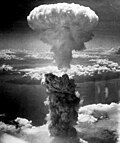 Nagasaki bomb
 -
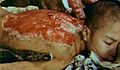 Sumiteru Taniguchi back
 -
 Hypocenter of Atomic bombings in Nagasaki
 -
 Oppenheimer
 -
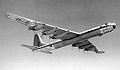 Convair B-36 Peacemaker
 -
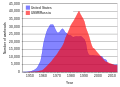 US and USSR nuclear stockpiles
 -
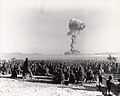 Exercise Desert Rock I (Buster-Jangle Dog)
 -
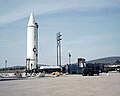 Jupiter on its launch pad
 -
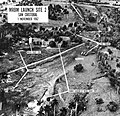 Cuban missiles


.jpg)


_002.jpg)


Medical Disclaimer: WikiMD is for informational purposes only and is not a substitute for professional medical advice. Content may be inaccurate or outdated and should not be used for diagnosis or treatment. Always consult your healthcare provider for medical decisions. Verify information with trusted sources such as CDC.gov and NIH.gov. By using this site, you agree that WikiMD is not liable for any outcomes related to its content. See full disclaimer.
Credits:Most images are courtesy of Wikimedia commons, and templates, categories Wikipedia, licensed under CC BY SA or similar.
Translate this page: - East Asian
中文,
日本,
한국어,
South Asian
हिन्दी,
தமிழ்,
తెలుగు,
Urdu,
ಕನ್ನಡ,
Southeast Asian
Indonesian,
Vietnamese,
Thai,
မြန်မာဘာသာ,
বাংলা
European
español,
Deutsch,
français,
Greek,
português do Brasil,
polski,
română,
русский,
Nederlands,
norsk,
svenska,
suomi,
Italian
Middle Eastern & African
عربى,
Turkish,
Persian,
Hebrew,
Afrikaans,
isiZulu,
Kiswahili,
Other
Bulgarian,
Hungarian,
Czech,
Swedish,
മലയാളം,
मराठी,
ਪੰਜਾਬੀ,
ગુજરાતી,
Portuguese,
Ukrainian
