Nuchal scan
The nuchal scan, also known as the nuchal translucency (NT) scan, is a non-invasive prenatal ultrasound screening used to identify potential chromosomal abnormalities in a fetus. The scan measures the clear space, or nuchal translucency, in the tissue at the back of the developing fetus's neck. Abnormalities can result in an increase in this space due to altered extracellular matrix composition and limited lymphatic drainage[1].
Screening Indications[edit]
While not a diagnostic tool, the nuchal scan is an important part of prenatal screening for conditions such as Down syndrome, Patau syndrome, Edwards syndrome, and non-genetic conditions like body-stalk anomaly. These conditions often involve impaired cardiovascular development, which can manifest as an increased nuchal translucency[2].
Procedure[edit]
The nuchal scan is typically performed between the 11th and 14th weeks of pregnancy, during the first trimester. The ultrasound technician will measure the nuchal translucency using an ultrasound machine. The procedure is non-invasive and painless for both the mother and the fetus[3].
Interpretation[edit]
The results of a nuchal scan are usually combined with the results of specific blood tests and the mother's age to calculate the risk of the fetus having a chromosomal abnormality. A larger nuchal translucency measurement can indicate a higher risk of a chromosomal abnormality. However, a definitive diagnosis requires more invasive procedures like amniocentesis or chorionic villus sampling[4].
Risks and Limitations[edit]
Although the nuchal scan is generally safe, it does have limitations. It cannot provide a definitive diagnosis and there is a chance of false-positive and false-negative results. Additionally, not all chromosomal abnormalities or birth defects can be detected by the nuchal scan[5].
Conclusion[edit]
Despite these limitations, the nuchal scan remains an important tool in prenatal screening, providing early identification of potential chromosomal abnormalities. It allows healthcare providers and parents to make informed decisions about further testing and management of the pregnancy.
References[edit]
 | This medical article is a stub. You can help WikiMD by expanding the page. |
Nuchal_scan[edit]
-
 Nuchal translucency scan
 -
 Nuchal edema in Down Syndrome
 -
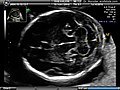 Nuchal fold measurement on the TC plane


Medical Disclaimer: WikiMD is for informational purposes only and is not a substitute for professional medical advice. Content may be inaccurate or outdated and should not be used for diagnosis or treatment. Always consult your healthcare provider for medical decisions. Verify information with trusted sources such as CDC.gov and NIH.gov. By using this site, you agree that WikiMD is not liable for any outcomes related to its content. See full disclaimer.
Credits:Most images are courtesy of Wikimedia commons, and templates, categories Wikipedia, licensed under CC BY SA or similar.
Translate this page: - East Asian
中文,
日本,
한국어,
South Asian
हिन्दी,
தமிழ்,
తెలుగు,
Urdu,
ಕನ್ನಡ,
Southeast Asian
Indonesian,
Vietnamese,
Thai,
မြန်မာဘာသာ,
বাংলা
European
español,
Deutsch,
français,
Greek,
português do Brasil,
polski,
română,
русский,
Nederlands,
norsk,
svenska,
suomi,
Italian
Middle Eastern & African
عربى,
Turkish,
Persian,
Hebrew,
Afrikaans,
isiZulu,
Kiswahili,
Other
Bulgarian,
Hungarian,
Czech,
Swedish,
മലയാളം,
मराठी,
ਪੰਜਾਬੀ,
ગુજરાતી,
Portuguese,
Ukrainian

