Nasi kuning
Indonesian rice dish
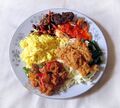
Nasi Kuning (Indonesian for "yellow rice") is a traditional Indonesian rice dish, characterized by its vibrant yellow color, which is derived from the use of turmeric. It is a popular dish in Indonesian cuisine, often served during special occasions and celebrations.
Ingredients and Preparation[edit]
Nasi Kuning is made by cooking rice with coconut milk, turmeric, and various spices, which give it a rich flavor and distinctive color. The basic ingredients include:
The rice is typically rinsed and soaked before being cooked with the coconut milk and spices. The turmeric not only imparts a yellow hue but also adds a subtle earthy flavor. The coconut milk provides a creamy texture, making the rice rich and aromatic.
Cultural Significance[edit]
Nasi Kuning holds a special place in Indonesian culture. It is often associated with celebrations such as birthdays, weddings, and other festive occasions. The yellow color symbolizes wealth, prosperity, and good fortune, making it a popular choice for ceremonial events.
Serving Suggestions[edit]
Nasi Kuning is usually served with a variety of side dishes, which may include:
- Fried chicken or grilled chicken
- Sambal, a spicy chili paste
- Tempeh or tofu
- Boiled eggs
- Fried shallots
- Cucumber slices
The dish is often presented in a cone shape, known as "tumpeng," which is a traditional way of serving Nasi Kuning during special events.
Variations[edit]
While the basic recipe for Nasi Kuning remains consistent, there are regional variations across Indonesia. Some versions may include additional spices or ingredients, such as:
- Pandan leaves for added fragrance
- Galangal for a hint of spice
- Cloves and cinnamon for a more complex flavor profile
Related Pages[edit]
-
 Nasi Kuning Ibu Sulastri
 -
Ritual Birat Sengkolo Kejawen
-
Tumpeng Kompas
-
Bumbu Nasi Kuning
-
Preparing Nasi Kuning
-
Nasi Kuning Breakfast
-
Nasi Kuning Banjar
-
Nasi Kuning Dendeng Khas Banjarmasin
-
Nasi Kuning Daun Woka
-
Nasi Kuning Kotak Box
-
Nasi Kuning Tawau


Medical Disclaimer: WikiMD is for informational purposes only and is not a substitute for professional medical advice. Content may be inaccurate or outdated and should not be used for diagnosis or treatment. Always consult your healthcare provider for medical decisions. Verify information with trusted sources such as CDC.gov and NIH.gov. By using this site, you agree that WikiMD is not liable for any outcomes related to its content. See full disclaimer.
Credits:Most images are courtesy of Wikimedia commons, and templates, categories Wikipedia, licensed under CC BY SA or similar.
Translate page: - East Asian
中文,
日本,
한국어,
South Asian
हिन्दी,
தமிழ்,
తెలుగు,
Urdu,
ಕನ್ನಡ,
Southeast Asian
Indonesian,
Vietnamese,
Thai,
မြန်မာဘာသာ,
বাংলা
European
español,
Deutsch,
français,
Greek,
português do Brasil,
polski,
română,
русский,
Nederlands,
norsk,
svenska,
suomi,
Italian
Middle Eastern & African
عربى,
Turkish,
Persian,
Hebrew,
Afrikaans,
isiZulu,
Kiswahili,
Other
Bulgarian,
Hungarian,
Czech,
Swedish,
മലയാളം,
मराठी,
ਪੰਜਾਬੀ,
ગુજરાતી,
Portuguese,
Ukrainian


.png)


