National Institute of Allergy and Infectious Diseases
National Institute of Allergy and Infectious Diseases (NIAID) is a part of the United States Department of Health and Human Services and is tasked with conducting and supporting basic and applied research to better understand, treat, and ultimately prevent infectious, immunologic, and allergic diseases.
History[edit]
The NIAID was established in 1955 as a response to the need for research on allergy, infectious diseases, and immunology. Over the years, it has been at the forefront of research on various diseases such as HIV/AIDS, influenza, malaria, Ebola, and most recently, COVID-19. The institute has played a crucial role in developing vaccines, treatments, and diagnostics for numerous diseases.
Mission and Activities[edit]
The primary mission of NIAID is to lead research to understand, treat, and prevent infectious, immunologic, and allergic diseases. This involves a wide range of activities including basic and clinical research, funding external research, and collaborating with other research organizations and pharmaceutical companies. NIAID also plays a key role in responding to public health emergencies.
Research Areas[edit]
NIAID focuses on a broad spectrum of research areas including:
These research areas encompass a wide range of diseases and conditions, from common allergies to life-threatening infections.
Facilities[edit]
NIAID operates several state-of-the-art research facilities, including laboratories at the National Institutes of Health (NIH) campus in Bethesda, Maryland, and at various locations across the United States and around the world. These facilities are equipped with advanced technologies that enable scientists to conduct high-level research.
Funding and Grants[edit]
NIAID supports a vast network of researchers through grants and contracts. The institute provides funding for research projects, training programs, and collaborative research initiatives. Funding opportunities are available for both domestic and international researchers.
Public Health Impact[edit]
The work of NIAID has had a significant impact on public health. The institute's research has led to the development of numerous vaccines, antiviral drugs, diagnostic tests, and treatment protocols. These advancements have saved millions of lives and improved the quality of life for people with chronic infectious and immune-mediated diseases.
See Also[edit]
- Centers for Disease Control and Prevention (CDC)
- World Health Organization (WHO)
- Vaccine
- Epidemic
- Pandemic
 | This medical article is a stub. You can help WikiMD by expanding the page. |
-
 National Institute of Allergy and Infectious Diseases
 -
 NIAID HIV AIDS clinical trials networks
 -
 Victor H. Haas
 -
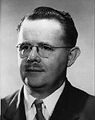 Justin M. Andrews
 -
 Dorland J. Davis
 -
 Richard Krause
 -
 Anthony Fauci
 -
 Hugh Auchincloss
 -
 Jeanne Marrazzo
 -
 NIAID Rockville 2020
 -
 Reservoirs


_(32957680970).jpg)


Medical Disclaimer: WikiMD is for informational purposes only and is not a substitute for professional medical advice. Content may be inaccurate or outdated and should not be used for diagnosis or treatment. Always consult your healthcare provider for medical decisions. Verify information with trusted sources such as CDC.gov and NIH.gov. By using this site, you agree that WikiMD is not liable for any outcomes related to its content. See full disclaimer.
Credits:Most images are courtesy of Wikimedia commons, and templates, categories Wikipedia, licensed under CC BY SA or similar.
Translate page: - East Asian
中文,
日本,
한국어,
South Asian
हिन्दी,
தமிழ்,
తెలుగు,
Urdu,
ಕನ್ನಡ,
Southeast Asian
Indonesian,
Vietnamese,
Thai,
မြန်မာဘာသာ,
বাংলা
European
español,
Deutsch,
français,
Greek,
português do Brasil,
polski,
română,
русский,
Nederlands,
norsk,
svenska,
suomi,
Italian
Middle Eastern & African
عربى,
Turkish,
Persian,
Hebrew,
Afrikaans,
isiZulu,
Kiswahili,
Other
Bulgarian,
Hungarian,
Czech,
Swedish,
മലയാളം,
मराठी,
ਪੰਜਾਬੀ,
ગુજરાતી,
Portuguese,
Ukrainian

