Sideburns


Sideburns are patches of facial hair grown on the sides of a man's face, in front of the ears. The term "sideburns" is a historical misnomer, stemming from a corruption of the name Ambrose Burnside, a 19th-century American Civil War general known for his distinctive facial hair that connected thick hair on the sides of his face with a mustache, but left the chin clean-shaven. The style reflects various cultural, historical, and fashion influences, and has been worn in various forms by men throughout history.
History[edit]
The history of sideburns dates back to ancient civilizations where facial hair was often a symbol of wisdom, strength, and status. In the 19th century, sideburns became particularly popular in the West due to figures like General Burnside. The style has waxed and waned in popularity over the years, influenced by military figures, cultural icons, and fashion trends. In the 1950s and 1960s, sideburns became associated with the rock and roll culture, with figures like Elvis Presley popularizing the look. In recent decades, sideburns have seen a resurgence in various forms, reflecting broader trends in men's grooming and fashion.
Styles[edit]
Sideburns can vary greatly in terms of length, width, and shape, ranging from thin strips of hair along the sides of the face to wide patches that extend from the hairline down to the jawline. Some common styles include:
- Mutton chops - This style involves wide and full sideburns that extend down to the corners of the mouth, often flaring outwards.
- Imperial sideburns - A more refined style that involves thin, neatly trimmed sideburns that extend down the sides of the face.
- Disconnected sideburns - Sideburns that are intentionally kept short or trimmed in a way that they do not connect with the hair on the head or the beard, creating a distinct separation.
Cultural Significance[edit]
Sideburns have held various meanings and connotations in different cultures and historical periods. In some contexts, they have been seen as a sign of masculinity and maturity, while in others, they have been associated with rebellion or non-conformity. The style of sideburns can also signal cultural affiliation, personal identity, or adherence to fashion trends.
Grooming and Maintenance[edit]
Proper grooming and maintenance of sideburns are essential for achieving the desired look. This can involve regular trimming to maintain shape and length, as well as washing and conditioning to keep the hair healthy. The specific grooming techniques can vary depending on the style of sideburns and the individual's hair type.
In Popular Culture[edit]
Sideburns have been a distinctive feature of many iconic figures in popular culture, from historical figures like General Burnside to musicians, actors, and fictional characters. They often contribute to a character's identity and can be used to evoke a particular era or personality trait.
Sideburns gallery[edit]
-
 Portrait of Mathabar Singh Thapa
 -
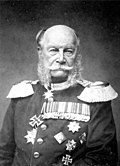 Kaiser Wilhelm I
 -
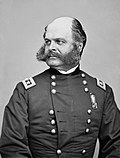 Ambrose Burnside
 -
 Werner von Siemens


,_ca._1850.jpg)
See Also[edit]
 | This fashion-related article is a stub. You can help WikiMD by expanding the page. |

Medical Disclaimer: WikiMD is for informational purposes only and is not a substitute for professional medical advice. Content may be inaccurate or outdated and should not be used for diagnosis or treatment. Always consult your healthcare provider for medical decisions. Verify information with trusted sources such as CDC.gov and NIH.gov. By using this site, you agree that WikiMD is not liable for any outcomes related to its content. See full disclaimer.
Credits:Most images are courtesy of Wikimedia commons, and templates, categories Wikipedia, licensed under CC BY SA or similar.
Translate page: - East Asian
中文,
日本,
한국어,
South Asian
हिन्दी,
தமிழ்,
తెలుగు,
Urdu,
ಕನ್ನಡ,
Southeast Asian
Indonesian,
Vietnamese,
Thai,
မြန်မာဘာသာ,
বাংলা
European
español,
Deutsch,
français,
Greek,
português do Brasil,
polski,
română,
русский,
Nederlands,
norsk,
svenska,
suomi,
Italian
Middle Eastern & African
عربى,
Turkish,
Persian,
Hebrew,
Afrikaans,
isiZulu,
Kiswahili,
Other
Bulgarian,
Hungarian,
Czech,
Swedish,
മലയാളം,
मराठी,
ਪੰਜਾਬੀ,
ગુજરાતી,
Portuguese,
Ukrainian

