Molecular imaging
Molecular Imaging is a type of medical imaging that provides detailed pictures of what is happening inside the body at the molecular and cellular level. Where other diagnostic imaging procedures—such as X-rays, Computed Tomography (CT) and Ultrasound—offer pictures of physical structure, molecular imaging allows physicians to see how the body is functioning and to measure its chemical and biological processes.
Overview[edit]
Molecular imaging originated from the field of radiopharmacology due to the need to better understand fundamental molecular pathways inside organisms in a noninvasive manner. It includes the field of nuclear medicine, which uses very small amounts of radioactive materials (radiopharmaceuticals) to diagnose and treat disease. In nuclear medicine imaging, the radiopharmaceuticals are detected by special types of cameras that work with computers to provide very precise pictures of the area of the body being imaged.
Techniques[edit]
Molecular imaging uses many different techniques, such as MRI (magnetic resonance imaging) and PET (positron emission tomography). These techniques offer unique insights into the human body that enable physicians to personalize patient care. In terms of diagnosis, molecular imaging is able to:
- Provide information that is unattainable with other imaging technologies or that would require more invasive procedures such as biopsy or surgery
- Identify disease in its earliest stages and determine the exact location of a tumor, often before symptoms occur or abnormalities can be detected with other diagnostic tests
As a tool for evaluating how the body responds to therapy, molecular imaging studies can:
- Determine the effectiveness of a treatment regimen, such as cancer therapy, soon after it begins, so it can be adjusted or changed as needed
- Assess the effectiveness of new therapeutic interventions
Applications[edit]
Molecular imaging is used in the diagnosis and management of many diseases and conditions, including:
- Cancer
- Heart disease
- Brain disorders such as Alzheimer's disease and Parkinson's disease
- Lung disorders
- Bone disorders
Future of Molecular Imaging[edit]
The future of molecular imaging lies in its ability to enable a new era of medicine in which doctors can identify disease and select a treatment based on an individual's unique molecular profile. This could lead to more personalized care and better outcomes for patients.

This WikiMD article can only be edited by registered and verified editors. You can log in or register.
-
Molecular Imaging Therapy
-
Molecular MRI
-
Imaging of Engineered E. coli Nissle 1917 in the Mouse Gut
-
Mouse SPECT Imaging
-
In Vivo Molecular Imaging of Experimental Joint Inflammation
-
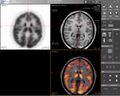 PET-IRM Cabeza


Medical Disclaimer: WikiMD is for informational purposes only and is not a substitute for professional medical advice. Content may be inaccurate or outdated and should not be used for diagnosis or treatment. Always consult your healthcare provider for medical decisions. Verify information with trusted sources such as CDC.gov and NIH.gov. By using this site, you agree that WikiMD is not liable for any outcomes related to its content. See full disclaimer.
Credits:Most images are courtesy of Wikimedia commons, and templates, categories Wikipedia, licensed under CC BY SA or similar.
Translate page: - East Asian
中文,
日本,
한국어,
South Asian
हिन्दी,
தமிழ்,
తెలుగు,
Urdu,
ಕನ್ನಡ,
Southeast Asian
Indonesian,
Vietnamese,
Thai,
မြန်မာဘာသာ,
বাংলা
European
español,
Deutsch,
français,
Greek,
português do Brasil,
polski,
română,
русский,
Nederlands,
norsk,
svenska,
suomi,
Italian
Middle Eastern & African
عربى,
Turkish,
Persian,
Hebrew,
Afrikaans,
isiZulu,
Kiswahili,
Other
Bulgarian,
Hungarian,
Czech,
Swedish,
മലയാളം,
मराठी,
ਪੰਜਾਬੀ,
ગુજરાતી,
Portuguese,
Ukrainian


