Wisdom tooth
A wisdom tooth or third molar is one of the three molars per quadrant of the human dentition. It is the most posterior of the three. Wisdom teeth generally erupt between the ages of 17 and 25. Most adults have four wisdom teeth, one in each of the four quadrants, but it is possible to have none, fewer, or more, in which case the extras are called supernumerary teeth.
Development[edit]
Wisdom teeth are generally the last teeth to develop and are located in the back of your mouth, behind your second molars. Their development is usually completed between the middle teenage years and early twenties, a time traditionally associated with the onset of maturity and the attainment of wisdom.
Impaction[edit]
Impaction of wisdom teeth happens when there is not enough space for the tooth to grow in a normal position. The tooth may grow at an angle and cause problems such as infection, damage to other teeth, or a cyst.
Extraction[edit]
Extraction of wisdom teeth is a common procedure. It is usually done under local anesthesia. The dentist or oral surgeon will make an incision in the gum tissue, remove the tooth, and then stitch the wound closed.
Complications[edit]
Complications can occur after the extraction of wisdom teeth. These can include infection, dry socket, nerve injury, and persistent pain.
See also[edit]

This WikiMD article can only be edited by registered and verified editors. You can log in or register.
-
Wisdom tooth
-
Wisdom tooth
-
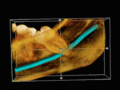 3D CT impacted wisdom tooth
 -
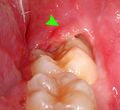 Pericoronitis with pus
 -
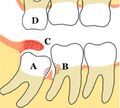 Lower mandibular third molar impaction pericoronitis diagram
 -
Impacted wisdom tooth X-ray
-
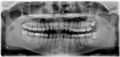 Impacted wisdom teeth


Medical Disclaimer: WikiMD is for informational purposes only and is not a substitute for professional medical advice. Content may be inaccurate or outdated and should not be used for diagnosis or treatment. Always consult your healthcare provider for medical decisions. Verify information with trusted sources such as CDC.gov and NIH.gov. By using this site, you agree that WikiMD is not liable for any outcomes related to its content. See full disclaimer.
Credits:Most images are courtesy of Wikimedia commons, and templates, categories Wikipedia, licensed under CC BY SA or similar.
Translate page: - East Asian
中文,
日本,
한국어,
South Asian
हिन्दी,
தமிழ்,
తెలుగు,
Urdu,
ಕನ್ನಡ,
Southeast Asian
Indonesian,
Vietnamese,
Thai,
မြန်မာဘာသာ,
বাংলা
European
español,
Deutsch,
français,
Greek,
português do Brasil,
polski,
română,
русский,
Nederlands,
norsk,
svenska,
suomi,
Italian
Middle Eastern & African
عربى,
Turkish,
Persian,
Hebrew,
Afrikaans,
isiZulu,
Kiswahili,
Other
Bulgarian,
Hungarian,
Czech,
Swedish,
മലയാളം,
मराठी,
ਪੰਜਾਬੀ,
ગુજરાતી,
Portuguese,
Ukrainian


