List of therapeutic monoclonal antibodies
Therapeutic monoclonal antibodies are a class of medications designed to target specific molecules within the body with high precision. These antibodies are engineered in the laboratory to mimic the immune system's ability to fight off harmful pathogens, such as bacteria and viruses, or to interfere with processes that lead to diseases, including cancer, autoimmune diseases, and inflammatory disorders. This article provides an overview of various therapeutic monoclonal antibodies used in clinical practice.
Overview[edit]
Monoclonal antibodies (mAbs) are produced by identical immune cells that are clones of a unique parent cell. Given their specificity, they can be directed to bind to specific targets, known as antigens, on the surface of cells or circulating in bodily fluids. The binding of a monoclonal antibody to its target antigen can trigger various therapeutic effects, including the direct killing of pathogen-infected cells or cancer cells, blocking signals that lead to inflammation, or interfering with the growth of tumors.
List of Therapeutic Monoclonal Antibodies[edit]
This list is incomplete; you can help WikiMD by expanding it.
- Adalimumab - Used for the treatment of various autoimmune diseases, including rheumatoid arthritis, psoriatic arthritis, and Crohn's disease.
- Rituximab - Targets the CD20 protein on the surface of B cells, used in the treatment of non-Hodgkin's lymphoma, chronic lymphocytic leukemia, and certain autoimmune diseases.
- Trastuzumab - Used for the treatment of HER2-positive breast cancer. It targets the HER2 receptor, which promotes the growth of cancer cells.
- Infliximab - Used to treat autoimmune diseases by blocking tumor necrosis factor alpha (TNFα), a substance in the body that causes inflammation.
- Omalizumab - Designed to decrease the immune system's reaction to allergens, used in the treatment of moderate to severe asthma and chronic urticaria.
Mechanism of Action[edit]
The mechanism of action of therapeutic monoclonal antibodies varies depending on their target. Some common mechanisms include:
- Neutralization - The antibody binds to a biological molecule, such as a cytokine or growth factor, neutralizing its biological activity.
- Cell destruction - The antibody can mediate the destruction of target cells through mechanisms such as antibody-dependent cellular cytotoxicity (ADCC) or complement-dependent cytotoxicity (CDC).
- Receptor blockade - The antibody binds to receptors on the surface of cells, preventing other molecules from binding and activating the receptor.
Development and Production[edit]
The development of therapeutic monoclonal antibodies involves several stages, including target identification, antibody generation, and preclinical and clinical testing. Monoclonal antibodies are produced using recombinant DNA technology, typically in cultured mammalian cells.
Challenges and Future Directions[edit]
While therapeutic monoclonal antibodies have revolutionized the treatment of many diseases, challenges remain, including high production costs, the potential for immune reactions, and the need for intravenous or subcutaneous administration. Ongoing research aims to overcome these challenges and expand the use of monoclonal antibodies in therapy.

This WikiMD article can only be edited by registered and verified editors. You can log in or register.
List of therapeutic monoclonal antibodies[edit]
-
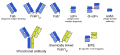 Engineered monoclonal antibodies


Medical Disclaimer: WikiMD is for informational purposes only and is not a substitute for professional medical advice. Content may be inaccurate or outdated and should not be used for diagnosis or treatment. Always consult your healthcare provider for medical decisions. Verify information with trusted sources such as CDC.gov and NIH.gov. By using this site, you agree that WikiMD is not liable for any outcomes related to its content. See full disclaimer.
Credits:Most images are courtesy of Wikimedia commons, and templates, categories Wikipedia, licensed under CC BY SA or similar.
Translate page: - East Asian
中文,
日本,
한국어,
South Asian
हिन्दी,
தமிழ்,
తెలుగు,
Urdu,
ಕನ್ನಡ,
Southeast Asian
Indonesian,
Vietnamese,
Thai,
မြန်မာဘာသာ,
বাংলা
European
español,
Deutsch,
français,
Greek,
português do Brasil,
polski,
română,
русский,
Nederlands,
norsk,
svenska,
suomi,
Italian
Middle Eastern & African
عربى,
Turkish,
Persian,
Hebrew,
Afrikaans,
isiZulu,
Kiswahili,
Other
Bulgarian,
Hungarian,
Czech,
Swedish,
മലയാളം,
मराठी,
ਪੰਜਾਬੀ,
ગુજરાતી,
Portuguese,
Ukrainian

