Lilium
Lilium is a genus of herbaceous flowering plants growing from bulbs, all with large prominent flowers. They are a group of flowering plants which are important in culture and literature in much of the world. Most species are native to the temperate northern hemisphere, though their range extends into the northern subtropics.
Description[edit]
Lilium species are erect perennial plants ranging in height from 60 cm (2 ft) to 180 cm (6 ft). They form naked or tunicless scaly underground bulbs which are their perennating organs. In some North American species, the base of the bulb develops into rhizomes, on which numerous small bulbs are found. Some species develop stolons.
The flowers are large, often fragrant, and come in a wide range of colors including whites, yellows, oranges, pinks, reds, and purples. Markings include spots and brush strokes. The plants are late spring- or summer-flowering.
Taxonomy[edit]
The genus Lilium was first described by Carl Linnaeus in 1753. It is a member of the family Liliaceae. The genus contains around 100 species, which are divided into several sections based on their morphology and geographical distribution.
Distribution and Habitat[edit]
Lilium species are widely distributed across much of Europe, Asia, and North America. They are typically found in temperate and subtropical regions. They grow in a variety of habitats including woodlands, grasslands, and alpine meadows.
Cultivation[edit]
Lilies are among the most popular garden plants. They are usually grown from bulbs, which are planted in the autumn or spring. They prefer well-drained soil and a sunny position. Lilies are also grown commercially for their flowers, which are used in floral arrangements.
Uses[edit]
Lilies have been cultivated for their aesthetic value and are often used in gardens and floral arrangements. Some species are also used in traditional medicine. For example, the bulbs of some species are edible and have been used as food in some cultures.
Symbolism[edit]
Lilies have a rich symbolic history. In Christianity, the lily is often associated with the Virgin Mary and is a symbol of purity and chastity. In other cultures, lilies can symbolize fertility, renewal, and transformation.
Also see[edit]
.JPG) Genera of the Liliaceae family Genera of the Liliaceae family |
||||||
|---|---|---|---|---|---|---|
|
Lilium[edit]
-
Lilium candidum
-
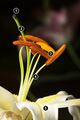 Lilium Stamens
 -
Lily petal
-
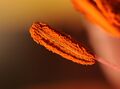 Lilium
 -
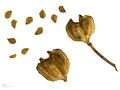 Lilium candidum
 -
Lilium distichum
-
Hanson's Lily Lilium hansonii
-
Lilium martagon var. cattaniae
-
Lilium medeoloides
-
Lilium tsingtauense
-
Lilium bolanderi
-
Lilium columbianum


Medical Disclaimer: WikiMD is for informational purposes only and is not a substitute for professional medical advice. Content may be inaccurate or outdated and should not be used for diagnosis or treatment. Always consult your healthcare provider for medical decisions. Verify information with trusted sources such as CDC.gov and NIH.gov. By using this site, you agree that WikiMD is not liable for any outcomes related to its content. See full disclaimer.
Credits:Most images are courtesy of Wikimedia commons, and templates, categories Wikipedia, licensed under CC BY SA or similar.
Translate page: - East Asian
中文,
日本,
한국어,
South Asian
हिन्दी,
தமிழ்,
తెలుగు,
Urdu,
ಕನ್ನಡ,
Southeast Asian
Indonesian,
Vietnamese,
Thai,
မြန်မာဘာသာ,
বাংলা
European
español,
Deutsch,
français,
Greek,
português do Brasil,
polski,
română,
русский,
Nederlands,
norsk,
svenska,
suomi,
Italian
Middle Eastern & African
عربى,
Turkish,
Persian,
Hebrew,
Afrikaans,
isiZulu,
Kiswahili,
Other
Bulgarian,
Hungarian,
Czech,
Swedish,
മലയാളം,
मराठी,
ਪੰਜਾਬੀ,
ગુજરાતી,
Portuguese,
Ukrainian


