Glossary of leaf morphology

The study of leaf morphology is essential for understanding the diversity and function of leaves in the plant kingdom. Leaves are the primary sites of photosynthesis in most plants, and their shapes, sizes, and structures are highly variable, reflecting adaptations to different environments and functions. This glossary provides definitions and descriptions of terms commonly used to describe leaf morphology.
Basic Leaf Types[edit]
Simple Leaves[edit]
A simple leaf is a single, undivided blade. The margin of the leaf may be entire, lobed, or serrated, but the leaf is not divided into separate leaflets. Examples include the leaves of maple and oak trees.
Compound Leaves[edit]
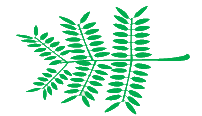
Compound leaves are divided into multiple leaflets. Each leaflet is attached to a central rachis, and the entire structure is considered a single leaf. Compound leaves can be further classified into different types based on their arrangement:
- Pinnate: Leaflets are arranged along either side of the rachis. Examples include rose and ash leaves.
- Bipinnate: Each leaflet is further divided into smaller leaflets.
Glossary of leaf morphology - Palmate: Leaflets radiate out from a single point at the end of the petiole, resembling the fingers of a hand. Examples include horse chestnut leaves.

Leaf Arrangement[edit]

Alternate[edit]
Leaves are arranged singly at different heights along the stem, with each leaf emerging from a different node.
Opposite[edit]
Leaves are paired at each node, directly across from each other on the stem.
Whorled[edit]
Three or more leaves are attached at a single node, encircling the stem.
Leaf Margins[edit]
Entire[edit]
The leaf margin is smooth and unbroken.
Serrated[edit]
The leaf margin has small, tooth-like projections.
Lobed[edit]
The leaf margin has deep indentations, creating lobes.
Leaf Venation[edit]
Parallel Venation[edit]
Veins run parallel to each other from the base to the tip of the leaf. This is common in monocots like grasses.
Reticulate Venation[edit]
Veins form a network across the leaf. This is typical of dicots like maple and oak.
Specialized Leaf Structures[edit]
Tendrils[edit]
Modified leaves or leaflets that are used by climbing plants to attach to supports.
Spines[edit]
Modified leaves that are reduced to sharp structures, often for protection, as seen in cacti.
Bracts[edit]
Modified leaves associated with reproductive structures, often colorful, as seen in poinsettia.
Related Pages[edit]

Medical Disclaimer: WikiMD is for informational purposes only and is not a substitute for professional medical advice. Content may be inaccurate or outdated and should not be used for diagnosis or treatment. Always consult your healthcare provider for medical decisions. Verify information with trusted sources such as CDC.gov and NIH.gov. By using this site, you agree that WikiMD is not liable for any outcomes related to its content. See full disclaimer.
Credits:Most images are courtesy of Wikimedia commons, and templates, categories Wikipedia, licensed under CC BY SA or similar.
Translate page: - East Asian
中文,
日本,
한국어,
South Asian
हिन्दी,
தமிழ்,
తెలుగు,
Urdu,
ಕನ್ನಡ,
Southeast Asian
Indonesian,
Vietnamese,
Thai,
မြန်မာဘာသာ,
বাংলা
European
español,
Deutsch,
français,
Greek,
português do Brasil,
polski,
română,
русский,
Nederlands,
norsk,
svenska,
suomi,
Italian
Middle Eastern & African
عربى,
Turkish,
Persian,
Hebrew,
Afrikaans,
isiZulu,
Kiswahili,
Other
Bulgarian,
Hungarian,
Czech,
Swedish,
മലയാളം,
मराठी,
ਪੰਜਾਬੀ,
ગુજરાતી,
Portuguese,
Ukrainian

