Lardon
Lardon is a small strip or cube of fatty bacon, or pork fat (usually subcutaneous fat) used in a wide variety of cuisines to flavor savory foods and salads. Originating from France, lardons are not usually smoked, and they are made from pork that has been cured in salt.
History[edit]
The term lardon originates from the French word lard, meaning bacon. It has been a staple in French cuisine since the Middle Ages. Lardons are traditionally used in a variety of dishes, including Coq au Vin, Quiche Lorraine, and many types of salad.
Preparation and Use[edit]
Lardons are prepared by cutting the fatback or belly of the pig into small strips or cubes. The pork is then salt-cured, and can be used either raw or cooked. When used in recipes, lardons are often rendered to release their fat before combining with other ingredients. They are commonly used to add a rich, savory flavor and a crunchy texture to a variety of dishes.
In French cuisine, lardons are frequently used in the classic dish Coq au Vin, where they are browned and then cooked with chicken, red wine, mushrooms, and garlic. They are also a key ingredient in Quiche Lorraine, a savory pie made with a custard filling, cheese, and lardons.
In addition to their use in French cuisine, lardons are also used in other culinary traditions. For example, in Italian cuisine, they are often used in pasta dishes like Carbonara.
Variations[edit]
While lardons are traditionally made from pork, variations can be made using other types of meat, such as duck or turkey. These alternatives can provide different flavors and can be used in the same way as traditional pork lardons.
See Also[edit]
References[edit]

Lardon[edit]
-
 Tourtière with lard
 -
 Coq au vin with lardons, onions, and garlic
 -
 Preparation of tartiflette
 -
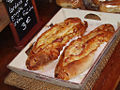 Fougasse de Foix
 -
 Larding of roast beef


.jpg)

Medical Disclaimer: WikiMD is for informational purposes only and is not a substitute for professional medical advice. Content may be inaccurate or outdated and should not be used for diagnosis or treatment. Always consult your healthcare provider for medical decisions. Verify information with trusted sources such as CDC.gov and NIH.gov. By using this site, you agree that WikiMD is not liable for any outcomes related to its content. See full disclaimer.
Credits:Most images are courtesy of Wikimedia commons, and templates, categories Wikipedia, licensed under CC BY SA or similar.
Translate page: - East Asian
中文,
日本,
한국어,
South Asian
हिन्दी,
தமிழ்,
తెలుగు,
Urdu,
ಕನ್ನಡ,
Southeast Asian
Indonesian,
Vietnamese,
Thai,
မြန်မာဘာသာ,
বাংলা
European
español,
Deutsch,
français,
Greek,
português do Brasil,
polski,
română,
русский,
Nederlands,
norsk,
svenska,
suomi,
Italian
Middle Eastern & African
عربى,
Turkish,
Persian,
Hebrew,
Afrikaans,
isiZulu,
Kiswahili,
Other
Bulgarian,
Hungarian,
Czech,
Swedish,
മലയാളം,
मराठी,
ਪੰਜਾਬੀ,
ગુજરાતી,
Portuguese,
Ukrainian

