Ileocecal valve
Ileocecal valve is a part of the human digestive system that connects the ileum (the last part of the small intestine) to the cecum (the first part of the large intestine). This valve plays a crucial role in digestion by controlling the flow of chyme from the small intestine to the large intestine and preventing the backflow of contents.
Anatomy[edit]
The ileocecal valve, also known as the Bauhin's valve, is located in the lower right quadrant of the abdomen. It is a sphincter muscle valve that consists of two lips, superior and inferior, which protrude into the lumen of the bowel. The valve is surrounded by the muscular structure of the cecum and the ileum.
Function[edit]
The primary function of the ileocecal valve is to prevent the backflow of contents from the large intestine into the small intestine. It also slows down the passage of chyme from the ileum to the cecum, allowing for further digestion and absorption of nutrients in the small intestine.
Clinical significance[edit]
Diseases and conditions that can affect the ileocecal valve include Crohn's disease, appendicitis, and colorectal cancer. Symptoms of ileocecal valve disorders can include abdominal pain, diarrhea, and weight loss. Diagnosis is typically made through imaging studies such as CT scan or colonoscopy. Treatment options depend on the underlying condition and can range from medication to surgery.
See also[edit]

This WikiMD article can only be edited by registered and verified editors. You can log in or register.
-
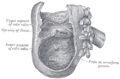 Ileocecal valve
 -
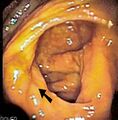 Ileocecal valve
 -
Ileum, cecum, and ascending colon
-
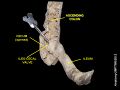 Cecum and ileum
 -
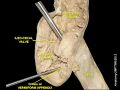 Ileocecal valve
 -
Cecum and ileum


Medical Disclaimer: WikiMD is for informational purposes only and is not a substitute for professional medical advice. Content may be inaccurate or outdated and should not be used for diagnosis or treatment. Always consult your healthcare provider for medical decisions. Verify information with trusted sources such as CDC.gov and NIH.gov. By using this site, you agree that WikiMD is not liable for any outcomes related to its content. See full disclaimer.
Credits:Most images are courtesy of Wikimedia commons, and templates, categories Wikipedia, licensed under CC BY SA or similar.
Translate page: - East Asian
中文,
日本,
한국어,
South Asian
हिन्दी,
தமிழ்,
తెలుగు,
Urdu,
ಕನ್ನಡ,
Southeast Asian
Indonesian,
Vietnamese,
Thai,
မြန်မာဘာသာ,
বাংলা
European
español,
Deutsch,
français,
Greek,
português do Brasil,
polski,
română,
русский,
Nederlands,
norsk,
svenska,
suomi,
Italian
Middle Eastern & African
عربى,
Turkish,
Persian,
Hebrew,
Afrikaans,
isiZulu,
Kiswahili,
Other
Bulgarian,
Hungarian,
Czech,
Swedish,
മലയാളം,
मराठी,
ਪੰਜਾਬੀ,
ગુજરાતી,
Portuguese,
Ukrainian


