Herbarium
Herbarium is a collection of preserved plant specimens and associated data used for scientific study. The specimens may be whole plants or plant parts; these will usually be in dried form mounted on a sheet of paper but, depending upon the material, may also be kept in alcohol or other preservative. The collection is managed by a curator who is responsible for its care and maintenance.
History[edit]
The concept of herbaria dates back to 16th century Italy, with the first herbarium known to have been created by an Italian physician named Luca Ghini. The oldest herbarium, dating back to 1532, is preserved in the Natural History Museum, London.
Collection and Preservation[edit]
The process of collection involves the careful removal of a plant specimen from its natural habitat, ensuring that all parts of the plant, including roots, stems, leaves, and flowers, are intact. The collected specimen is then pressed and dried, typically using a plant press, to remove all moisture. The dried specimen is then mounted on a sheet of paper using a special adhesive.
Uses[edit]
Herbaria provide a reference for plant identification, offer material for systematic research, and serve as repositories for rare and endangered species. They are essential resources for studying plant taxonomy, plant ecology, and paleobotany.
Notable Herbaria[edit]
Some of the world's most notable herbaria include the Royal Botanic Gardens, Kew, the Natural History Museum, London, and the New York Botanical Garden. These institutions house millions of plant specimens and serve as important centers for botanical research.
See Also[edit]

-
 Herbarium
 -
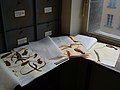 Nepenthes herbarium specimens
 -
 Siebold Collection Herbarium book
 -
 Herbarium preparation
 -
 Herbarium field collection
 -
 Naturhistoriska Riksmuseet
.jpg)


Ad. Transform your life with W8MD's
GLP-1 weight loss injections special from $29.99 with insurance
|
WikiMD Medical Encyclopedia |
Medical Disclaimer: WikiMD is for informational purposes only and is not a substitute for professional medical advice. Content may be inaccurate or outdated and should not be used for diagnosis or treatment. Always consult your healthcare provider for medical decisions. Verify information with trusted sources such as CDC.gov and NIH.gov. By using this site, you agree that WikiMD is not liable for any outcomes related to its content. See full disclaimer.
Credits:Most images are courtesy of Wikimedia commons, and templates, categories Wikipedia, licensed under CC BY SA or similar.
Translate this page: - East Asian
中文,
日本,
한국어,
South Asian
हिन्दी,
தமிழ்,
తెలుగు,
Urdu,
ಕನ್ನಡ,
Southeast Asian
Indonesian,
Vietnamese,
Thai,
မြန်မာဘာသာ,
বাংলা
European
español,
Deutsch,
français,
Greek,
português do Brasil,
polski,
română,
русский,
Nederlands,
norsk,
svenska,
suomi,
Italian
Middle Eastern & African
عربى,
Turkish,
Persian,
Hebrew,
Afrikaans,
isiZulu,
Kiswahili,
Other
Bulgarian,
Hungarian,
Czech,
Swedish,
മലയാളം,
मराठी,
ਪੰਜਾਬੀ,
ગુજરાતી,
Portuguese,
Ukrainian
