Healthcare in the United States
Healthcare in the United States is a complex system that includes a variety of public and private providers, insurers, and programs. It is characterized by a mix of private and public funding, with the United States government providing healthcare for a portion of the population through programs such as Medicare, Medicaid, and the Children's Health Insurance Program (CHIP).
Overview[edit]
The United States healthcare system is unique among developed countries in that it does not have a universal healthcare system. Instead, most citizens are covered by private insurance, often provided through their employers. However, the government does provide healthcare for certain segments of the population, including the elderly, disabled, poor, and some veterans.
Healthcare Providers[edit]
Healthcare providers in the United States encompass individual health care personnel, health care facilities and medical products. These include Hospitals, Primary care physicians, Specialists, and Nursing homes.
Health Insurance[edit]
In the United States, health insurance is any program that helps pay for medical expenses, whether through privately purchased insurance, social insurance, or a social welfare program funded by the government. This includes private insurance companies, as well as government programs like Medicare and Medicaid.
Healthcare Reform[edit]
The Patient Protection and Affordable Care Act, often referred to as "Obamacare", was a significant reform effort aimed at reducing the number of uninsured and underinsured Americans, and improving the overall efficiency and effectiveness of the U.S. healthcare system.
Challenges[edit]
Despite its many resources, the U.S. healthcare system faces numerous challenges, including high costs, uneven quality, and large numbers of uninsured individuals. The U.S. also struggles with disparities in health outcomes across different racial, ethnic, and socioeconomic groups.
See Also[edit]
- Healthcare reform in the United States
- Health insurance in the United States
- Medicare (United States)
- Medicaid
- Patient Protection and Affordable Care Act

This US-health related article is a stub. You can help WikiMD by expanding it.
-
 NewYork-Presbyterian Hospital
 -
 Pennsylvania Hospital
 -
 Bellevue Psychiatric Hospital
 -
 Johns Hopkins Hospital
 -
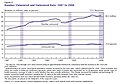 U.S. Uninsured and Uninsured Rate (1987 to 2008)
 -
 Mayo Clinic Plummer Building
 -
 Medicaid Expansion Map of U.S. (Affordable Care Act)
 -
 Life Expectancy vs Healthcare Spending
 -
 Life Expectancy by WBG - USA
 -
 Taussig Cancer Center
 -
 Life Expectancy Post-COVID
 -
 Aerial Picture of Jackson

.jpg)


.JPG)


Ad. Transform your life with W8MD's
GLP-1 weight loss injections special from $29.99 with insurance
|
WikiMD Medical Encyclopedia |
Medical Disclaimer: WikiMD is for informational purposes only and is not a substitute for professional medical advice. Content may be inaccurate or outdated and should not be used for diagnosis or treatment. Always consult your healthcare provider for medical decisions. Verify information with trusted sources such as CDC.gov and NIH.gov. By using this site, you agree that WikiMD is not liable for any outcomes related to its content. See full disclaimer.
Credits:Most images are courtesy of Wikimedia commons, and templates, categories Wikipedia, licensed under CC BY SA or similar.
Translate this page: - East Asian
中文,
日本,
한국어,
South Asian
हिन्दी,
தமிழ்,
తెలుగు,
Urdu,
ಕನ್ನಡ,
Southeast Asian
Indonesian,
Vietnamese,
Thai,
မြန်မာဘာသာ,
বাংলা
European
español,
Deutsch,
français,
Greek,
português do Brasil,
polski,
română,
русский,
Nederlands,
norsk,
svenska,
suomi,
Italian
Middle Eastern & African
عربى,
Turkish,
Persian,
Hebrew,
Afrikaans,
isiZulu,
Kiswahili,
Other
Bulgarian,
Hungarian,
Czech,
Swedish,
മലയാളം,
मराठी,
ਪੰਜਾਬੀ,
ગુજરાતી,
Portuguese,
Ukrainian
