Hemocyanin
Hemocyanin is a protein that transports oxygen in the blood of many mollusks and some arthropods, such as the horseshoe crab (Limulus polyphemus). Unlike the hemoglobin found in vertebrates, hemocyanin is blue in color due to the presence of copper in its active site, which binds oxygen, giving the blood a distinctive blue color. Hemocyanin is a large molecule composed of multiple subunits, which can vary in number among different species.
Structure and Function[edit]
Hemocyanin operates on a principle similar to that of hemoglobin. Oxygen binding is reversible, and the oxygenation state of the molecule changes its color from dark blue when deoxygenated to a lighter blue when oxygenated. The oxygen-binding mechanism of hemocyanin involves the copper ions at its active site. Each copper ion can bind one oxygen molecule (O2), facilitating the transport of oxygen from the respiratory organs to the tissues that require it for metabolism.
The structure of hemocyanin is quite complex. It is made up of multiple subunits, which can be hexamers or dodecamers, forming a cylindrical shape. These subunits are themselves composed of functional units, each containing a pair of copper atoms. The quaternary structure of hemocyanin allows for efficient oxygen transport and has been a subject of extensive research to understand its evolutionary significance and functional mechanism.
Evolutionary Significance[edit]
Hemocyanin is of particular interest to scientists because it represents a different evolutionary solution to the problem of oxygen transport in the blood. While vertebrates developed hemoglobin, which uses iron to bind oxygen, some invertebrates developed hemocyanin, which uses copper. This difference is thought to reflect the varying availability of these metals in the ancestral environments of these organisms.
Clinical and Biotechnological Applications[edit]
Research into hemocyanin has also found clinical and biotechnological applications. For example, hemocyanin from the Chilean abalone (Concholepas concholepas) has been used as an immunostimulant in the treatment of bladder cancer. Its ability to trigger the immune response makes it a valuable tool in vaccine development and cancer therapy.
See Also[edit]
References[edit]
<references/>
.svg)
This article is a biochemistry stub. You can help WikiMD by expanding it!

Hemocyanin[edit]
-
 Hemocyanin2
 -
 PDB 1hcy EBI
 -
 PDB 1oxy EBI
 -
 Molluscan hemocyanin (4YD9)
 -
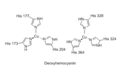 Deoxyhemocyanin full
 -
 Oxyhemocyanin full
 -
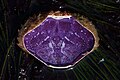 Hemocyanin Example


.png)


Ad. Transform your life with W8MD's
GLP-1 weight loss injections special from $29.99


W8MD Medical Weight Loss, Sleep and Medspa offers physician-supervised medical weight loss programs: NYC medical weight loss Philadelphia medical weight loss
Affordable GLP-1 Weight Loss ShotsAffordable GLP-1 Weight Loss Shots
Budget GLP-1 injections NYC (insurance & self-pay options) Popular treatments:
- Semaglutide starting from $29.99/week
- Tirzepatide starting from $45.00/week
✔ Most insurances accepted for visits ✔ Prior authorization support when eligible
Start your physician weight loss NYC journey today:
📍 NYC: Brooklyn weight loss center 📍 Philadelphia: Philadelphia weight loss center
📞 Call: 718-946-5500 (NYC) | 215-676-2334 (Philadelphia)
Tags: Affordable GLP1 weight loss NYC, Wegovy NYC, Zepbound NYC, Philadelphia medical weight loss


|
WikiMD Medical Encyclopedia |
Medical Disclaimer: WikiMD is not a substitute for professional medical advice. The information on WikiMD is provided as an information resource only, may be incorrect, outdated or misleading, and is not to be used or relied on for any diagnostic or treatment purposes. Please consult your health care provider before making any healthcare decisions or for guidance about a specific medical condition. WikiMD expressly disclaims responsibility, and shall have no liability, for any damages, loss, injury, or liability whatsoever suffered as a result of your reliance on the information contained in this site. By visiting this site you agree to the foregoing terms and conditions, which may from time to time be changed or supplemented by WikiMD. If you do not agree to the foregoing terms and conditions, you should not enter or use this site. See full disclaimer.
Credits:Most images are courtesy of Wikimedia commons, and templates, categories Wikipedia, licensed under CC BY SA or similar.
Translate this page: - East Asian
中文,
日本,
한국어,
South Asian
हिन्दी,
தமிழ்,
తెలుగు,
Urdu,
ಕನ್ನಡ,
Southeast Asian
Indonesian,
Vietnamese,
Thai,
မြန်မာဘာသာ,
বাংলা
European
español,
Deutsch,
français,
Greek,
português do Brasil,
polski,
română,
русский,
Nederlands,
norsk,
svenska,
suomi,
Italian
Middle Eastern & African
عربى,
Turkish,
Persian,
Hebrew,
Afrikaans,
isiZulu,
Kiswahili,
Other
Bulgarian,
Hungarian,
Czech,
Swedish,
മലയാളം,
मराठी,
ਪੰਜਾਬੀ,
ગુજરાતી,
Portuguese,
Ukrainian
