Gunpowder
Gunpowder is a chemical compound that was invented in China and later spread to the Middle East, Europe, and other parts of the world. It is a mixture of sulfur, charcoal, and potassium nitrate (saltpeter). Gunpowder is used as a propellant in firearms and as a pyrotechnic composition in fireworks. The invention of gunpowder led to the development of military technology and has had a significant impact on the course of history.
History[edit]
Gunpowder was invented in China during the Tang Dynasty (618–907 AD). It was initially used for medicinal purposes, but its explosive properties were soon recognized and it was used in warfare by the Song Dynasty (960–1279 AD). The knowledge of gunpowder spread to the Middle East in the 13th century, and from there to Europe.
Composition[edit]
Gunpowder is a mixture of sulfur, charcoal, and potassium nitrate. The sulfur and charcoal act as fuels, while the potassium nitrate is an oxidizer. The ratio of the ingredients can vary, but a typical formulation is 75% potassium nitrate, 15% charcoal, and 10% sulfur.
Uses[edit]
Gunpowder has been used in firearms and artillery for centuries. It is also used in fireworks and other pyrotechnic devices. In addition to its military and recreational uses, gunpowder has also been used in mining and construction to blast rock.
Safety[edit]
Gunpowder is a hazardous substance and must be handled with care. It can cause burns and eye injury, and its dust can be explosive. It should be stored in a cool, dry place away from heat and open flames.
See also[edit]
 | This medical article is a stub. You can help WikiMD by expanding the page. |
-
 Black Powder
 -
 Veterans Weekend, Hull
 -
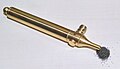 Zündkraut mit Zündkrautspender
 -
 Chinese Gunpowder Formula
 -
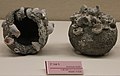 Tetsuhau (Shintenrai)
 -
 Ming Dynasty Eruptor Proto-cannon
 -
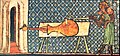 Early Cannon from De Nobilitatibus Sapientii Et Prudentiis Regum Manuscript, Walter de Milemete, 1326
 -
 De la pirotechnia 1540 Title Page
 -
 Rocket Warfare
 -
 Meister der Shâh-Jahân-Nâma-Memoiren
 -
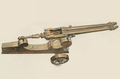 Madrid Canons Indiens
 -
 Pháo thủ


.jpg)


Medical Disclaimer: WikiMD is for informational purposes only and is not a substitute for professional medical advice. Content may be inaccurate or outdated and should not be used for diagnosis or treatment. Always consult your healthcare provider for medical decisions. Verify information with trusted sources such as CDC.gov and NIH.gov. By using this site, you agree that WikiMD is not liable for any outcomes related to its content. See full disclaimer.
Credits:Most images are courtesy of Wikimedia commons, and templates, categories Wikipedia, licensed under CC BY SA or similar.
Translate this page: - East Asian
中文,
日本,
한국어,
South Asian
हिन्दी,
தமிழ்,
తెలుగు,
Urdu,
ಕನ್ನಡ,
Southeast Asian
Indonesian,
Vietnamese,
Thai,
မြန်မာဘာသာ,
বাংলা
European
español,
Deutsch,
français,
Greek,
português do Brasil,
polski,
română,
русский,
Nederlands,
norsk,
svenska,
suomi,
Italian
Middle Eastern & African
عربى,
Turkish,
Persian,
Hebrew,
Afrikaans,
isiZulu,
Kiswahili,
Other
Bulgarian,
Hungarian,
Czech,
Swedish,
മലയാളം,
मराठी,
ਪੰਜਾਬੀ,
ગુજરાતી,
Portuguese,
Ukrainian

