Guillain–Barré syndrome

Editor-In-Chief: Prab R Tumpati, MD
Obesity, Sleep & Internal medicine
Founder, WikiMD Wellnesspedia &
W8MD's weight loss doctor NYC
Philadelphia GLP-1 weight loss and GLP-1 clinic NYC
| Guillain–Barré syndrome | |
|---|---|

| |
| Synonyms | N/A |
| Pronounce | N/A |
| Specialty | N/A |
| Symptoms | Muscle weakness, paresthesia, autonomic dysfunction |
| Complications | N/A |
| Onset | Rapid, over hours to weeks |
| Duration | Weeks to months |
| Types | N/A |
| Causes | Often follows infection (e.g., Campylobacter jejuni, Cytomegalovirus, Epstein–Barr virus) |
| Risks | Recent infection, surgery, vaccination |
| Diagnosis | Clinical examination, nerve conduction study, cerebrospinal fluid analysis |
| Differential diagnosis | Chronic inflammatory demyelinating polyneuropathy, myasthenia gravis, botulism |
| Prevention | N/A |
| Treatment | Intravenous immunoglobulin, plasmapheresis, supportive care |
| Medication | N/A |
| Prognosis | Variable; most recover fully, some have residual weakness |
| Frequency | 1-2 per 100,000 per year |
| Deaths | 4-7% mortality rate |
Guillain–Barré syndrome (GBS) is a rapid-onset muscle weakness caused by the immune system damaging the peripheral nervous system. The initial symptoms are typically changes in sensation or pain along with muscle weakness, beginning in the feet and hands, often spreading to the arms and upper body, with both sides being involved. The symptoms develop over hours to a few weeks. During the acute phase, the disorder can be life-threatening, with about 15% developing weakness of the breathing muscles and therefore requiring mechanical ventilation. Some are affected by changes in the function of the autonomic nervous system, which can lead to dangerous abnormalities in heart rate and blood pressure.
Causes[edit]
GBS is believed to be triggered by an infection. The diagnosis is usually made based on the symptoms and physical examination, although nerve conduction studies and lumbar puncture (to look for elevated protein levels in the cerebrospinal fluid) can provide supportive evidence. The underlying mechanism involves the body's immune system mistakenly attacking the peripheral nerves and damaging their myelin insulation. Sometimes, this immune dysfunction is triggered by an infection.
Treatment[edit]
The most commonly used treatments are intravenous immunoglobulins (IVIG) and plasmapheresis. IVIG is usually the first line of treatment, followed by plasmapheresis if IVIG is not effective. Steroids have also been tried, but they have not been found to be effective. The disorder can cause long-term problems, with about a third having some degree of weakness after a year, and about a fifth having a long-term disability. With good care, death is uncommon.
Gallery[edit]
-
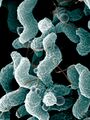 Campylobacter jejuni, a common trigger of Guillain–Barré syndrome
 -
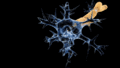 Nerve damage in Guillain–Barré syndrome
 -
 Georges Guillain, after whom the syndrome is named


See also[edit]
References[edit]

Sponsored Health Resource

W8MD Weight Loss, Sleep & MedSpa
Looking for physician-supervised weight loss, semaglutide, tirzepatide, or GLP-1 receptor agonist options? W8MD helps eligible patients in New York City, Brooklyn, New Jersey, Connecticut, Pennsylvania, Delaware, and greater Philadelphia with medical weight loss, sleep medicine, and long-term maintenance support.
GLP-1 specials: Affordable GLP-1 injections NYC and Philadelphia starting from $29.99/week and up for semaglutide with insurance accepted for qualifying visits, and $45/week and up for tirzepatide with insurance accepted for qualifying visits. Self-pay options start from $59.99/week and up for semaglutide and $69.99/week and up for tirzepatide.
Medical weight loss NYC | Affordable GLP-1 injections NYC | Budget GLP-1 weight loss shots Philadelphia | New Jersey medical weight loss | NYC medical weight loss | Philadelphia medical weight loss | Sleep clinic NYC | W8MD's Philadelphia GLP-1 doctor | Weight loss prescriptions NYC
Book a W8MD appointment · View GLP-1 specials
Paid promotional message. Eligibility, pricing, insurance coverage, medication availability, and results vary. Medical evaluation required.

Medical Disclaimer: WikiMD is for informational purposes only and is not a substitute for professional medical advice. Content may be inaccurate or outdated and should not be used for diagnosis or treatment. Always consult your healthcare provider for medical decisions. Verify information with trusted sources such as CDC.gov and NIH.gov. By using this site, you agree that WikiMD is not liable for any outcomes related to its content. See full disclaimer.
Credits:Most images are courtesy of Wikimedia commons, and templates, categories Wikipedia, licensed under CC BY SA or similar.
Translate page: - East Asian
中文,
日本,
한국어,
South Asian
हिन्दी,
தமிழ்,
తెలుగు,
Urdu,
ಕನ್ನಡ,
Southeast Asian
Indonesian,
Vietnamese,
Thai,
မြန်မာဘာသာ,
বাংলা
European
español,
Deutsch,
français,
Greek,
português do Brasil,
polski,
română,
русский,
Nederlands,
norsk,
svenska,
suomi,
Italian
Middle Eastern & African
عربى,
Turkish,
Persian,
Hebrew,
Afrikaans,
isiZulu,
Kiswahili,
Other
Bulgarian,
Hungarian,
Czech,
Swedish,
മലയാളം,
मराठी,
ਪੰਜਾਬੀ,
ગુજરાતી,
Portuguese,
Ukrainian

