Gravity
Gravity is a natural phenomenon by which all things with mass or energy—including planets, stars, galaxies, and even light—are brought toward (or gravitate toward) one another. On Earth, gravity gives weight to physical objects, and the Moon's gravity causes the ocean tides. The gravitational attraction of the original gaseous matter present in the Universe caused it to begin coalescing, forming stars – and for the stars to group together into galaxies – so gravity is responsible for many of the large scale structures in the Universe. Gravity has an infinite range, although its effects become increasingly weaker on farther objects.
History[edit]
The ancient Greeks noticed that certain objects always fell straight down and that the stars and planets moved in a predictable fashion. This led to the development of the concept of natural motion. Aristotle believed that there was a natural place for each substance and that objects would move to reach their natural place.
Modern understanding[edit]
The modern understanding of gravity is based on Albert Einstein's general theory of relativity. According to this theory, gravity is not a force but is a consequence of the curvature of spacetime caused by mass and energy.
Effects of gravity[edit]
Gravity has a number of effects on the Earth and the universe. It is responsible for the formation of tides, the shape of the Earth, and the trajectories of comets, asteroids, and interplanetary spacecraft.
See also[edit]
- General relativity
- Gravitational wave
- Gravitational constant
- Gravitational field
- Gravitational force
- Gravitational potential
- Gravitational singularity
- Gravitational time dilation
- Gravitational wave
- Gravity of Earth
- Gravity well
- Theory of relativity
References[edit]

This WikiMD article can only be edited by registered and verified editors. You can log in or register.
-
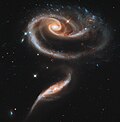 UGC 1810 and UGC 1813 in Arp 273
 -
 The Leaning Tower of Pisa
 -
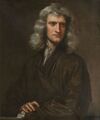 Portrait of Sir Isaac Newton, 1689
 -
 Schwarzschild Metric
 -
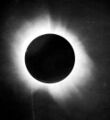 1919 Solar Eclipse
 -
 Falling Ball
 -
 Gravity Action-Reaction
 -
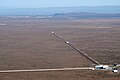 LIGO Hanford Aerial View
 -
 Galactic Rotation
.jpg)


Advertise on WikiMD — 81,000+ full articles, ~900,000 total pages, ~250 million page views. Global reach, limited time promotional rates from $1/page/day. Learn more · View stats

Translate page: - East Asian
中文,
日本,
한국어,
South Asian
हिन्दी,
தமிழ்,
తెలుగు,
Urdu,
ಕನ್ನಡ,
Southeast Asian
Indonesian,
Vietnamese,
Thai,
မြန်မာဘာသာ,
বাংলা
European
español,
Deutsch,
français,
Greek,
português do Brasil,
polski,
română,
русский,
Nederlands,
norsk,
svenska,
suomi,
Italian
Middle Eastern & African
عربى,
Turkish,
Persian,
Hebrew,
Afrikaans,
isiZulu,
Kiswahili,
Other
Bulgarian,
Hungarian,
Czech,
Swedish,
മലയാളം,
मराठी,
ਪੰਜਾਬੀ,
ગુજરાતી,
Portuguese,
Ukrainian
About WikiMD • Contact • Disclaimer • Privacy • Copyright • Site statistics
Some content and images may originate from Wikimedia Commons or Wikipedia and remain subject to their stated licenses. Unless otherwise noted, eligible WikiMD content is available under CC BY-SA 4.0.
WikiMD Wellnesspedia — Free health & wellness information for patients, students, and health professionals.

