Gram-positive bacteria
Gram-positive bacteria are a type of bacteria that are classified by the color they turn after a chemical called Gram stain is applied to them. Gram-positive bacteria turn blue when this stain is applied, while Gram-negative bacteria do not.
Characteristics[edit]
Gram-positive bacteria have a thick cell wall that is rich in peptidoglycan. This cell wall is responsible for the bacteria's ability to retain the Gram stain. In addition to the cell wall, some Gram-positive bacteria have a layer of polysaccharide or teichoic acid on their surface.
Types of Gram-positive bacteria[edit]
There are many types of Gram-positive bacteria, including:
Diseases caused by Gram-positive bacteria[edit]
Gram-positive bacteria can cause a variety of diseases, including:
- Staphylococcus aureus can cause skin infections, pneumonia, and food poisoning.
- Streptococcus pneumoniae can cause pneumonia, meningitis, and otitis media.
- Enterococcus faecalis and Enterococcus faecium can cause urinary tract infections, bacteremia, and endocarditis.
- Listeria monocytogenes can cause listeriosis, a serious infection usually caused by eating food contaminated with the bacteria.
- Bacillus anthracis causes anthrax, a rare but serious illness.
- Clostridium difficile causes infections that can range from diarrhea to life-threatening inflammation of the colon.
Treatment[edit]
Gram-positive bacteria are usually sensitive to penicillin and other beta-lactam antibiotics. However, some Gram-positive bacteria have developed resistance to these antibiotics, making treatment more difficult.
See also[edit]

This WikiMD article can only be edited by registered and verified editors. You can log in or register.
-
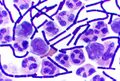 Gram stain of Bacillus anthracis
 -
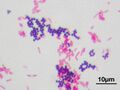 Gram stain showing Gram-positive bacteria
 -
 Diagram of Gram-positive cell wall
 -
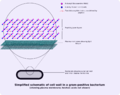 Schematic of Gram-positive cell wall
 -
 Classification of Gram-positive bacteria
 -
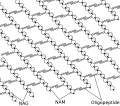 Structure of murein in Gram-positive bacteria
 -
 Actinomyces species under microscope


Medical Disclaimer: WikiMD is for informational purposes only and is not a substitute for professional medical advice. Content may be inaccurate or outdated and should not be used for diagnosis or treatment. Always consult your healthcare provider for medical decisions. Verify information with trusted sources such as CDC.gov and NIH.gov. By using this site, you agree that WikiMD is not liable for any outcomes related to its content. See full disclaimer.
Credits:Most images are courtesy of Wikimedia commons, and templates, categories Wikipedia, licensed under CC BY SA or similar.
Translate page: - East Asian
中文,
日本,
한국어,
South Asian
हिन्दी,
தமிழ்,
తెలుగు,
Urdu,
ಕನ್ನಡ,
Southeast Asian
Indonesian,
Vietnamese,
Thai,
မြန်မာဘာသာ,
বাংলা
European
español,
Deutsch,
français,
Greek,
português do Brasil,
polski,
română,
русский,
Nederlands,
norsk,
svenska,
suomi,
Italian
Middle Eastern & African
عربى,
Turkish,
Persian,
Hebrew,
Afrikaans,
isiZulu,
Kiswahili,
Other
Bulgarian,
Hungarian,
Czech,
Swedish,
മലയാളം,
मराठी,
ਪੰਜਾਬੀ,
ગુજરાતી,
Portuguese,
Ukrainian

