Exploration
Exploration is the act of searching or traveling a terrain for the purpose of discovery of resources or information. In the context of science, exploration is considered as a systematic study to search for and gather information about a particular area or phenomenon.
History of Exploration[edit]
The history of exploration is a vast and complex topic, with roots in the earliest human civilizations. From the ancient Egyptians exploring the Nile, to the Greeks and Romans expanding their empires, to the Age of Discovery in the 15th and 16th centuries, exploration has been a crucial part of human history. Read more...
Types of Exploration[edit]
There are several types of exploration, including Geographical Exploration, Space Exploration, Oceanic Exploration, and Scientific Exploration. Each of these types has its own unique challenges and rewards.
Geographical Exploration[edit]
Geographical exploration involves the study and discovery of unknown lands and territories. This can include everything from mapping uncharted territories to studying the flora and fauna of a new region. Read more...
Space Exploration[edit]
Space exploration is the discovery and exploration of celestial structures in outer space by means of evolving and growing space technology. Read more...
Oceanic Exploration[edit]
Oceanic exploration is the discovery and exploration of the ocean's depths, its physical and biological aspects. Read more...
Scientific Exploration[edit]
Scientific exploration is the systematic study of the natural world through observation and experiment. Read more...
Exploration Techniques[edit]
There are many techniques used in exploration, including Remote Sensing, Geophysical Survey, Aerial Survey, and Satellite Imagery. These techniques allow explorers to gather information about an area without physically being there. Read more...
See Also[edit]
References[edit]

This WikiMD article can only be edited by registered and verified editors. You can log in or register.
-
 Theatrum Orbis Terrarum by Abraham Ortelius, World, 1572
 -
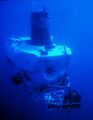 ALVIN submersible
 -
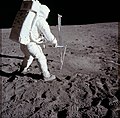 Apollo 11 astronaut Buzz Aldrin on the Moon
 -
 Curiosity Rover Self-Portrait


.jpg)


Medical Disclaimer: WikiMD is for informational purposes only and is not a substitute for professional medical advice. Content may be inaccurate or outdated and should not be used for diagnosis or treatment. Always consult your healthcare provider for medical decisions. Verify information with trusted sources such as CDC.gov and NIH.gov. By using this site, you agree that WikiMD is not liable for any outcomes related to its content. See full disclaimer.
Credits:Most images are courtesy of Wikimedia commons, and templates, categories Wikipedia, licensed under CC BY SA or similar.
Translate page: - East Asian
中文,
日本,
한국어,
South Asian
हिन्दी,
தமிழ்,
తెలుగు,
Urdu,
ಕನ್ನಡ,
Southeast Asian
Indonesian,
Vietnamese,
Thai,
မြန်မာဘာသာ,
বাংলা
European
español,
Deutsch,
français,
Greek,
português do Brasil,
polski,
română,
русский,
Nederlands,
norsk,
svenska,
suomi,
Italian
Middle Eastern & African
عربى,
Turkish,
Persian,
Hebrew,
Afrikaans,
isiZulu,
Kiswahili,
Other
Bulgarian,
Hungarian,
Czech,
Swedish,
മലയാളം,
मराठी,
ਪੰਜਾਬੀ,
ગુજરાતી,
Portuguese,
Ukrainian

