Egg cell
Egg cell or Ovum is the female reproductive cell or gamete in oogamous organisms. The term is used when the distinct stage of oogenesis is entered. In mammals, the egg cell is typically called an ovum.
Overview[edit]
The egg cell is typically not capable of active movement, and it is much larger (visible to the naked eye) than the motile sperm cells. When egg and sperm fuse, a diploid cell (the zygote) is formed, which rapidly grows into a new organism.
Structure[edit]
While the sperm cell has a long tail for motility, the egg cell is generally spherical, non-motile and is one of the largest cells in the female body. The egg cell also has a cell membrane and cytoplasm, similar to other cells, and it carries the mother's genetic material.
Function[edit]
The main function of the egg cell is to fuse with the sperm cell and provide the half of the genetic material needed to create a new individual. It is also responsible for initiating the first cell divisions of the new individual.
Egg Cell Development[edit]
The development of the egg cell starts in the female body during the fetal stage. This process, known as oogenesis, continues up to the menopause in human females.
See Also[edit]

This WikiMD article can only be edited by registered and verified editors. You can log in or register.
-
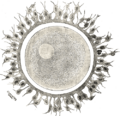 Egg cell
 -
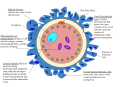 Diagram of an ovum
 -
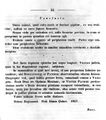 "Conclusio" from Carl Ernst von Baer's De Ovi Mammalium
 -
Human egg cell
-
 Sperm approaching an egg
 -
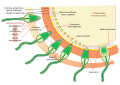 Acrosome reaction diagram
 -
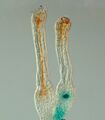 Egg cell


Medical Disclaimer: WikiMD is for informational purposes only and is not a substitute for professional medical advice. Content may be inaccurate or outdated and should not be used for diagnosis or treatment. Always consult your healthcare provider for medical decisions. Verify information with trusted sources such as CDC.gov and NIH.gov. By using this site, you agree that WikiMD is not liable for any outcomes related to its content. See full disclaimer.
Credits:Most images are courtesy of Wikimedia commons, and templates, categories Wikipedia, licensed under CC BY SA or similar.
Translate page: - East Asian
中文,
日本,
한국어,
South Asian
हिन्दी,
தமிழ்,
తెలుగు,
Urdu,
ಕನ್ನಡ,
Southeast Asian
Indonesian,
Vietnamese,
Thai,
မြန်မာဘာသာ,
বাংলা
European
español,
Deutsch,
français,
Greek,
português do Brasil,
polski,
română,
русский,
Nederlands,
norsk,
svenska,
suomi,
Italian
Middle Eastern & African
عربى,
Turkish,
Persian,
Hebrew,
Afrikaans,
isiZulu,
Kiswahili,
Other
Bulgarian,
Hungarian,
Czech,
Swedish,
മലയാളം,
मराठी,
ਪੰਜਾਬੀ,
ગુજરાતી,
Portuguese,
Ukrainian


