Economic system
Economic system refers to the organized way in which a state or nation allocates its resources and apportions goods and services in the national community. It encompasses a variety of institutions, entities, decision-making processes, and patterns of consumption that collectively determine how resources are used. Economic systems are primarily distinguished by their approach to the three fundamental economic problems: what to produce, how to produce, and for whom to produce.
Types of Economic Systems[edit]
There are four main types of economic systems: traditional, command, market, and mixed economies.
Traditional Economy[edit]
A traditional economy relies on customs, history, and time-honored beliefs. Production methods are often passed down from generation to generation with little change. In these economies, the community's role is emphasized, and economic activities are typically centered around the family or tribe.
Command Economy[edit]
In a command economy, the government or a central authority makes all decisions regarding the production and distribution of goods and services. The government controls resources and is responsible for determining what goods and services are produced, how they are produced, and who receives them.
Market Economy[edit]
A market economy is characterized by the private ownership of resources and the use of markets and prices to coordinate and direct economic activity. In a market economy, decisions regarding investment, production, and distribution are based on supply and demand, and prices serve as signals to both buyers and sellers.
Mixed Economy[edit]
A mixed economy combines elements of both market and command economic systems. In a mixed economy, some sectors are left to private ownership and free market mechanisms while other sectors have significant government regulation and oversight.
Economic Indicators[edit]
Economic systems are evaluated using various indicators, including GDP (Gross Domestic Product), unemployment rates, inflation rates, and the Human Development Index (HDI). These indicators help assess the health and efficiency of an economic system.
Challenges and Criticisms[edit]
Economic systems face challenges such as inequality, environmental degradation, and the need for sustainable development. Critics argue that some systems may be more prone to these issues than others. For example, market economies may lead to significant income and wealth disparities, while command economies may suffer from inefficiencies and a lack of innovation.
Future Directions[edit]
The future of economic systems may involve more sustainable and equitable practices, incorporating advances in technology and a greater emphasis on environmental and social goals. The concept of a circular economy, which emphasizes the reuse and recycling of resources, is gaining traction as a potential way to address environmental challenges.
 | This economics-related article is a stub. You can help WikiMD by expanding the page. |
Economic_system[edit]
-
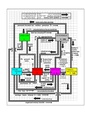 DiagFuncMacroSyst
 -
 Economic Systems Typology (v4)
.jpg)

Medical Disclaimer: WikiMD is for informational purposes only and is not a substitute for professional medical advice. Content may be inaccurate or outdated and should not be used for diagnosis or treatment. Always consult your healthcare provider for medical decisions. Verify information with trusted sources such as CDC.gov and NIH.gov. By using this site, you agree that WikiMD is not liable for any outcomes related to its content. See full disclaimer.
Credits:Most images are courtesy of Wikimedia commons, and templates, categories Wikipedia, licensed under CC BY SA or similar.
Translate page: - East Asian
中文,
日本,
한국어,
South Asian
हिन्दी,
தமிழ்,
తెలుగు,
Urdu,
ಕನ್ನಡ,
Southeast Asian
Indonesian,
Vietnamese,
Thai,
မြန်မာဘာသာ,
বাংলা
European
español,
Deutsch,
français,
Greek,
português do Brasil,
polski,
română,
русский,
Nederlands,
norsk,
svenska,
suomi,
Italian
Middle Eastern & African
عربى,
Turkish,
Persian,
Hebrew,
Afrikaans,
isiZulu,
Kiswahili,
Other
Bulgarian,
Hungarian,
Czech,
Swedish,
മലയാളം,
मराठी,
ਪੰਜਾਬੀ,
ગુજરાતી,
Portuguese,
Ukrainian

