Echinopsis lageniformis

Echinopsis lageniformis, commonly known as the Bolivian torch cactus, is a species of flowering plant in the cactus family Cactaceae. Native to Bolivia, this cactus is known for its psychoactive properties due to the presence of alkaloids such as mescaline. It is a fast-growing plant that can reach heights of up to 2-5 meters and features large, white flowers that bloom nocturnally.
Description[edit]
Echinopsis lageniformis is characterized by its columnar, green to blue-green stems that can grow up to 15 cm in diameter. The stems are ribbed, with 15-30 ribs, and are covered in areoles from which spines emerge. The spines can be up to 10 cm long. The flowers of the Bolivian torch cactus are large, fragrant, and white, opening at night and closing in the morning. They can be up to 20 cm long and 10-15 cm in diameter.
Distribution and Habitat[edit]
Originally from Bolivia, Echinopsis lageniformis thrives in high-altitude regions, typically above 2000 meters. It is adapted to arid environments and can be found in the Andean mountain range.
Cultivation and Uses[edit]
Echinopsis lageniformis is cultivated both for ornamental purposes and for its mescaline content, which has been used traditionally in Andean rituals and ceremonies. In cultivation, it requires well-draining soil, full sun, and moderate watering, with reduced watering in the winter to mimic its natural habitat's conditions.
Psychoactive Properties[edit]
The Bolivian torch cactus contains mescaline, a psychedelic alkaloid. Mescaline induces altered states of consciousness, including visual hallucinations and changes in perception, mood, and thought when ingested. The use of Echinopsis lageniformis for its psychoactive properties has a long tradition among indigenous peoples in Bolivia.
Conservation[edit]
While Echinopsis lageniformis is not currently listed as endangered, its habitat is threatened by agricultural expansion, deforestation, and climate change. Conservation efforts are necessary to ensure the survival of this species in its natural habitat.
See Also[edit]
 | This plant article is a stub. You can help WikiMD by expanding the page. |
-
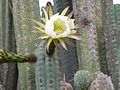 Echinopsis lageniformis
 -
 Trichocereus bridgesii
 -
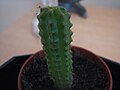 Baby Bridgesii
 -
 Trichocereus bridgesii
 -
Penis Plant
-
 Echinopsis scopulicola


Medical Disclaimer: WikiMD is for informational purposes only and is not a substitute for professional medical advice. Content may be inaccurate or outdated and should not be used for diagnosis or treatment. Always consult your healthcare provider for medical decisions. Verify information with trusted sources such as CDC.gov and NIH.gov. By using this site, you agree that WikiMD is not liable for any outcomes related to its content. See full disclaimer.
Credits:Most images are courtesy of Wikimedia commons, and templates, categories Wikipedia, licensed under CC BY SA or similar.
Translate this page: - East Asian
中文,
日本,
한국어,
South Asian
हिन्दी,
தமிழ்,
తెలుగు,
Urdu,
ಕನ್ನಡ,
Southeast Asian
Indonesian,
Vietnamese,
Thai,
မြန်မာဘာသာ,
বাংলা
European
español,
Deutsch,
français,
Greek,
português do Brasil,
polski,
română,
русский,
Nederlands,
norsk,
svenska,
suomi,
Italian
Middle Eastern & African
عربى,
Turkish,
Persian,
Hebrew,
Afrikaans,
isiZulu,
Kiswahili,
Other
Bulgarian,
Hungarian,
Czech,
Swedish,
മലയാളം,
मराठी,
ਪੰਜਾਬੀ,
ગુજરાતી,
Portuguese,
Ukrainian


