Dive computer
Dive Computer is a device used by underwater divers to measure the time and depth of a dive so that a safe ascent profile can be calculated and displayed so that the diver can avoid decompression sickness.
Overview[edit]
A dive computer is a type of computer that is specifically designed to be used by scuba divers. It is a crucial piece of equipment that helps divers monitor and manage their dive profiles to avoid decompression sickness, also known as the bends. The dive computer provides real-time information about the diver's depth, dive time, and ascent rate, among other data.
Function[edit]
The primary function of a dive computer is to calculate and display the amount of time that a diver can safely remain at their current depth without needing to perform decompression stops during their ascent. This is known as the no decompression limit (NDL). The computer continuously recalculates the NDL as the diver ascends or descends, taking into account the changing pressure and the diver's breathing gas.
Types of Dive Computers[edit]
There are several types of dive computers, including wrist-mounted computers, console computers, and air-integrated computers. Each type has its own advantages and disadvantages, and the choice of which to use often depends on the diver's personal preference and the type of diving they plan to do.
Safety[edit]
While dive computers are an essential tool for divers, they are not infallible. Divers should always have a backup plan in case of computer failure, and should never exceed the limits set by their computer. It is also important to remember that the computer's calculations are based on a theoretical model, and individual divers may react differently to decompression than the model predicts.
See Also[edit]
|
|
This article is a stub You can help WikiMD by registering and expanding it with useful details, internal links, formatting, and categories. Editing is available only to registered and verified users. WikiMD is a comprehensive, free health and wellness encyclopedia. |

-
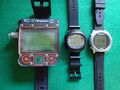 Dive computer
 -
 Dive computer


Sponsored Health Resource

W8MD Weight Loss, Sleep & MedSpa
Looking for physician-supervised weight loss, semaglutide, tirzepatide, or GLP-1 receptor agonist options? W8MD helps eligible patients in New York City, Brooklyn, New Jersey, Connecticut, Pennsylvania, Delaware, and greater Philadelphia with medical weight loss, sleep medicine, and long-term maintenance support.
GLP-1 specials: Affordable GLP-1 injections NYC and Philadelphia starting from $29.99/week and up for semaglutide with insurance accepted for qualifying visits, and $45/week and up for tirzepatide with insurance accepted for qualifying visits. Self-pay options start from $59.99/week and up for semaglutide and $69.99/week and up for tirzepatide.
- Medical weight loss NYC
- Affordable GLP-1 injections NYC
- Budget GLP-1 weight loss shots Philadelphia
- New Jersey medical weight loss
- NYC medical weight loss blog
- Philadelphia weight loss blog
- Sleep medicine and sleep apnea services
- W8MD MedSpa and wellness
Book a W8MD appointment · View GLP-1 specials
Paid promotional message. Eligibility, pricing, insurance coverage, medication availability, and results vary. Medical evaluation required.

Medical Disclaimer: WikiMD is for informational purposes only and is not a substitute for professional medical advice. Content may be inaccurate or outdated and should not be used for diagnosis or treatment. Always consult your healthcare provider for medical decisions. Verify information with trusted sources such as CDC.gov and NIH.gov. By using this site, you agree that WikiMD is not liable for any outcomes related to its content. See full disclaimer.
Credits:Most images are courtesy of Wikimedia commons, and templates, categories Wikipedia, licensed under CC BY SA or similar.
Translate page: - East Asian
中文,
日本,
한국어,
South Asian
हिन्दी,
தமிழ்,
తెలుగు,
Urdu,
ಕನ್ನಡ,
Southeast Asian
Indonesian,
Vietnamese,
Thai,
မြန်မာဘာသာ,
বাংলা
European
español,
Deutsch,
français,
Greek,
português do Brasil,
polski,
română,
русский,
Nederlands,
norsk,
svenska,
suomi,
Italian
Middle Eastern & African
عربى,
Turkish,
Persian,
Hebrew,
Afrikaans,
isiZulu,
Kiswahili,
Other
Bulgarian,
Hungarian,
Czech,
Swedish,
മലയാളം,
मराठी,
ਪੰਜਾਬੀ,
ગુજરાતી,
Portuguese,
Ukrainian


