Digoxin toxicity

Prab R. Tumpati, MD — Editor-in-Chief, WikiMD Medical Encyclopedia
Internal medicine • Obesity medicine • Sleep medicine
Professional affiliations: Founder of WikiMD and W8MD Weight Loss, Sleep & MedSpa.
Biography, credentials and affiliations • Editorial policy • Disclosure policy
| Digoxin toxicity | |
|---|---|

| |
| Synonyms | N/A |
| Pronounce | N/A |
| Specialty | N/A |
| Symptoms | Nausea, vomiting, diarrhea, abdominal pain, confusion, visual disturbances, arrhythmias |
| Complications | Cardiac arrest, ventricular fibrillation, atrial tachycardia |
| Onset | Acute or chronic |
| Duration | Variable |
| Types | N/A |
| Causes | Overdose of digoxin or digitalis |
| Risks | Kidney failure, hypokalemia, hypomagnesemia, hypercalcemia, drug interactions |
| Diagnosis | Electrocardiogram, serum digoxin level, electrolyte panel |
| Differential diagnosis | Acute coronary syndrome, hyperkalemia, hypokalemia, hypomagnesemia, hypercalcemia |
| Prevention | Monitoring of serum digoxin levels, renal function, and electrolytes |
| Treatment | Activated charcoal, digoxin-specific antibody fragments, electrolyte correction, antiarrhythmic drugs |
| Medication | Digoxin immune fab |
| Prognosis | Variable, depending on severity and treatment |
| Frequency | Rare |
| Deaths | N/A |
Digoxin toxicity is a condition that occurs when you have high levels of the medication digoxin in your body. This can happen if you take too much of the drug at once or if your body has trouble getting rid of it. Digoxin is a type of medication called a cardiac glycoside. It is used to treat certain heart conditions, such as atrial fibrillation and heart failure.
Causes[edit]
Digoxin toxicity can be caused by several factors. These include taking too much digoxin, having kidney problems that make it hard for your body to get rid of the drug, and taking certain other medications that can increase your body's digoxin levels.
Symptoms[edit]
The symptoms of digoxin toxicity can vary depending on how much of the drug is in your body. They can include nausea, vomiting, diarrhea, abdominal pain, confusion, vision changes, and irregular heartbeat.
Diagnosis[edit]
To diagnose digoxin toxicity, your doctor will likely ask about your symptoms and medical history. They may also order blood tests to check your digoxin levels and to see how well your kidneys are working.
Treatment[edit]
Treatment for digoxin toxicity usually involves stopping the medication and treating any symptoms. In severe cases, you may need to be hospitalized. Your doctor may also give you a medication called digoxin immune fab, which can help remove the drug from your body.
Prevention[edit]
To help prevent digoxin toxicity, it's important to take the medication exactly as your doctor prescribes. You should also have regular check-ups to monitor your digoxin levels and kidney function.
Images[edit]
-
Symptoms of digoxin toxicity
-
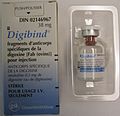 Digibind, an antidote for digoxin toxicity

See also[edit]

Advertise on WikiMD — 81,000+ full articles, ~900,000 total pages, ~250 million page views. Global reach, limited time promotional rates from $1/page/day. Learn more · View stats

Translate page: - East Asian
中文,
日本,
한국어,
South Asian
हिन्दी,
தமிழ்,
తెలుగు,
Urdu,
ಕನ್ನಡ,
Southeast Asian
Indonesian,
Vietnamese,
Thai,
မြန်မာဘာသာ,
বাংলা
European
español,
Deutsch,
français,
Greek,
português do Brasil,
polski,
română,
русский,
Nederlands,
norsk,
svenska,
suomi,
Italian
Middle Eastern & African
عربى,
Turkish,
Persian,
Hebrew,
Afrikaans,
isiZulu,
Kiswahili,
Other
Bulgarian,
Hungarian,
Czech,
Swedish,
മലയാളം,
मराठी,
ਪੰਜਾਬੀ,
ગુજરાતી,
Portuguese,
Ukrainian
About WikiMD • Contact • Disclaimer • Privacy • Copyright • Site statistics
Some content and images may originate from Wikimedia Commons or Wikipedia and remain subject to their stated licenses. Unless otherwise noted, eligible WikiMD content is available under CC BY-SA 4.0.
WikiMD Wellnesspedia — Free health & wellness information for patients, students, and health professionals.


