Cell culture
Cell culture is a fundamental technique in the field of cell biology where cells are grown under controlled conditions. The practice of cell culture has played a significant role in scientific research, particularly in producing biological products and developing genetic engineering techniques.
History[edit]
The concept of cell culture was first introduced in the early 20th century. The initial experiments were conducted by Ross Granville Harrison and Alexis Carrel, who successfully cultivated animal tissues in vitro. This marked the beginning of cell culture technology.
Types of Cell Culture[edit]
There are several types of cell culture, including primary cell culture, secondary cell culture, and cell line.
Primary Cell Culture[edit]
Primary cell culture is the process of disassociating cells from a parental tissue, which is then grown in a suitable medium. These cells maintain the physiological properties of the original tissue.
Secondary Cell Culture[edit]
Secondary cell culture, also known as cell line or subculture, involves the process of transferring the cells from a primary culture into a new vessel. This allows for the prolongation of the culture beyond the lifespan of the primary cells.
Cell Line[edit]
A cell line is a permanently established cell culture that proliferates indefinitely given appropriate fresh medium and space.
Techniques[edit]
Cell culture techniques vary depending on the type of cells being cultured. The most common techniques include monolayer culture, suspension culture, and three-dimensional culture.
Monolayer Culture[edit]
In monolayer culture, cells are grown in a single layer on a glass or plastic surface.
Suspension Culture[edit]
Suspension culture involves the growth of cells in a medium, where the cells multiply while suspended in the liquid.
Three-Dimensional Culture[edit]
Three-dimensional culture, also known as 3D culture, is a technique where cells are grown in a 3D environment. This method is often used to mimic the in vivo conditions.
Applications[edit]
Cell culture has a wide range of applications in various fields such as virology, oncology, pharmacology, and genetics. It is used for the production of vaccines, therapeutic proteins, and testing drug efficacy and toxicity.
Challenges[edit]
Despite its numerous applications, cell culture faces several challenges including contamination, genetic drift, and ethical issues.
 | This cell biology article is a stub. You can help WikiMD by expanding the page. |
Cell_culture[edit]
-
 Cell culture in a tiny Petri dish
 -
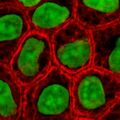 Epithelial cells
 -
 CHO cells adherent
 -
 DMEM cell culture medium
 -
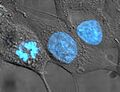 HeLa cells stained with Hoechst 33258
 -
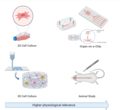 Cell culture


Medical Disclaimer: WikiMD is for informational purposes only and is not a substitute for professional medical advice. Content may be inaccurate or outdated and should not be used for diagnosis or treatment. Always consult your healthcare provider for medical decisions. Verify information with trusted sources such as CDC.gov and NIH.gov. By using this site, you agree that WikiMD is not liable for any outcomes related to its content. See full disclaimer.
Credits:Most images are courtesy of Wikimedia commons, and templates, categories Wikipedia, licensed under CC BY SA or similar.
Translate this page: - East Asian
中文,
日本,
한국어,
South Asian
हिन्दी,
தமிழ்,
తెలుగు,
Urdu,
ಕನ್ನಡ,
Southeast Asian
Indonesian,
Vietnamese,
Thai,
မြန်မာဘာသာ,
বাংলা
European
español,
Deutsch,
français,
Greek,
português do Brasil,
polski,
română,
русский,
Nederlands,
norsk,
svenska,
suomi,
Italian
Middle Eastern & African
عربى,
Turkish,
Persian,
Hebrew,
Afrikaans,
isiZulu,
Kiswahili,
Other
Bulgarian,
Hungarian,
Czech,
Swedish,
മലയാളം,
मराठी,
ਪੰਜਾਬੀ,
ગુજરાતી,
Portuguese,
Ukrainian

