Cryogenics
Cryogenics is the study of the production and behavior of materials at very low temperatures. It is not to be confused with Cryonics, the low-temperature preservation of humans and animals who can no longer be sustained by contemporary medicine.
Overview[edit]
Cryogenics is the production and behavior of materials at very low temperatures. The word originates from the Greek words "kryos" meaning "cold" and "genes" meaning "born". The term is usually used to refer to the study of phenomena that occur at temperatures below the boiling point of liquid nitrogen (-196 degrees Celsius or -321 degrees Fahrenheit).
Applications[edit]
Cryogenics has numerous applications in a wide range of fields. These include the production of liquid oxygen for rocket fuel, the storage of sperm and eggs in fertility treatments, and the preservation of biological samples for scientific research. In addition, cryogenics is used in the field of medicine for procedures such as cryosurgery, where it is used to destroy abnormal tissues.
Cryogenic Fluids[edit]
Cryogenic fluids are liquids that are kept at very low temperatures to maintain them in a liquid state. These fluids are typically used in the field of cryogenics. The most commonly used cryogenic fluids include liquid nitrogen, liquid helium, and liquid oxygen.
Cryogenic Storage[edit]
Cryogenic storage refers to the storing of materials at very low temperatures in order to maintain their physical and chemical properties. This method of storage is often used in the field of biology to preserve biological samples.
See Also[edit]
References[edit]

This WikiMD article can only be edited by registered and verified editors. You can log in or register.
Cryogenics[edit]
-
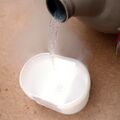 Liquid nitrogen
 -
 ISIM 3 logical region
 -
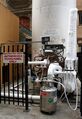 Liquid nitrogen tank
 -
 Cryogenic carbon steel socket weld globe valve
 -
 Iced nitrogen valves
 -
 The MUSE instrument on the VLT
 -
 Cryogenic gases delivery truck Ypsilanti Michigan


Medical Disclaimer: WikiMD is for informational purposes only and is not a substitute for professional medical advice. Content may be inaccurate or outdated and should not be used for diagnosis or treatment. Always consult your healthcare provider for medical decisions. Verify information with trusted sources such as CDC.gov and NIH.gov. By using this site, you agree that WikiMD is not liable for any outcomes related to its content. See full disclaimer.
Credits:Most images are courtesy of Wikimedia commons, and templates, categories Wikipedia, licensed under CC BY SA or similar.
Translate page: - East Asian
中文,
日本,
한국어,
South Asian
हिन्दी,
தமிழ்,
తెలుగు,
Urdu,
ಕನ್ನಡ,
Southeast Asian
Indonesian,
Vietnamese,
Thai,
မြန်မာဘာသာ,
বাংলা
European
español,
Deutsch,
français,
Greek,
português do Brasil,
polski,
română,
русский,
Nederlands,
norsk,
svenska,
suomi,
Italian
Middle Eastern & African
عربى,
Turkish,
Persian,
Hebrew,
Afrikaans,
isiZulu,
Kiswahili,
Other
Bulgarian,
Hungarian,
Czech,
Swedish,
മലയാളം,
मराठी,
ਪੰਜਾਬੀ,
ગુજરાતી,
Portuguese,
Ukrainian

