Crying
Crying is a natural response humans have to a range of emotions, including sadness, grief, joy, and frustration. It is a complex secretomotor phenomenon characterized by the shedding of tears from the lacrimal apparatus, without any irritation of the ocular structures.
Physiology of Crying[edit]
Crying is produced by an increased activity of the lacrimal functional unit, an integrated system which includes the lacrimal gland, ocular surface (cornea, conjunctiva and meibomian glands), lids, and the sensory and motor nerves that connect them.
Types of Crying[edit]
There are three types of crying: basal, reflex, and emotional.
- Basal crying is the quiet, continuous production of tears which serves to keep the cornea lubricated.
- Reflex crying occurs in response to an irritant in the eye, such as smoke, foreign bodies or a gust of wind.
- Emotional crying is the body's response to a range of emotions and is considered to be a unique aspect of human behavior.
Emotional Crying[edit]
Emotional crying is a response to a range of emotions. These can include sadness, happiness, fear, frustration, or even social bonding. Some theories propose that crying, by blurring vision, can handicap aggressive or defensive actions, and may function as a reliable signal of appeasement, need, or attachment.
Health Benefits of Crying[edit]
Crying is not only a human response to sorrow and frustration, it's also a healthy one. Crying is a natural way to reduce emotional stress that, left unchecked, has negative physical affects on the body, including increased risk of cardiovascular disease and other stress-related disorders.
See Also[edit]
References[edit]

This WikiMD article can only be edited by registered and verified editors. You can log in or register.
Crying[edit]
-
 Crying girl
 -
 Ghanian Funeral Rite - One Week Celebration of the Dead
 -
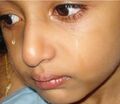 Tears
Tears -
 D. Maria II
 -
 Crying infant
 -
 Weeping Parisian
 -
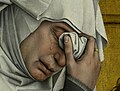 Tears of Mary of Clopas
 -
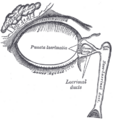 Gray896

.jpg)

.jpg)
.jpg)


Sponsored Health Resource

W8MD Weight Loss, Sleep & MedSpa
Looking for physician-supervised weight loss, semaglutide, tirzepatide, or GLP-1 receptor agonist options? W8MD helps eligible patients in New York City, Brooklyn, New Jersey, Connecticut, Pennsylvania, Delaware, and greater Philadelphia with medical weight loss, sleep medicine, and long-term maintenance support.
GLP-1 specials: Affordable GLP-1 injections NYC and Philadelphia starting from $29.99/week and up for semaglutide with insurance accepted for qualifying visits, and $45/week and up for tirzepatide with insurance accepted for qualifying visits. Self-pay options start from $59.99/week and up for semaglutide and $69.99/week and up for tirzepatide.
Medical weight loss NYC | Affordable GLP-1 injections NYC | Budget GLP-1 weight loss shots Philadelphia | New Jersey medical weight loss | NYC medical weight loss | Philadelphia medical weight loss | Sleep clinic NYC | W8MD's Philadelphia GLP-1 doctor | Weight loss prescriptions NYC
Book a W8MD appointment · View GLP-1 specials
Paid promotional message. Eligibility, pricing, insurance coverage, medication availability, and results vary. Medical evaluation required.

Medical Disclaimer: WikiMD is for informational purposes only and is not a substitute for professional medical advice. Content may be inaccurate or outdated and should not be used for diagnosis or treatment. Always consult your healthcare provider for medical decisions. Verify information with trusted sources such as CDC.gov and NIH.gov. By using this site, you agree that WikiMD is not liable for any outcomes related to its content. See full disclaimer.
Credits:Most images are courtesy of Wikimedia commons, and templates, categories Wikipedia, licensed under CC BY SA or similar.
Translate page: - East Asian
中文,
日本,
한국어,
South Asian
हिन्दी,
தமிழ்,
తెలుగు,
Urdu,
ಕನ್ನಡ,
Southeast Asian
Indonesian,
Vietnamese,
Thai,
မြန်မာဘာသာ,
বাংলা
European
español,
Deutsch,
français,
Greek,
português do Brasil,
polski,
română,
русский,
Nederlands,
norsk,
svenska,
suomi,
Italian
Middle Eastern & African
عربى,
Turkish,
Persian,
Hebrew,
Afrikaans,
isiZulu,
Kiswahili,
Other
Bulgarian,
Hungarian,
Czech,
Swedish,
മലയാളം,
मराठी,
ਪੰਜਾਬੀ,
ગુજરાતી,
Portuguese,
Ukrainian

