Creatine
Creatine is a naturally occurring amino acid that is found in the body, primarily in the muscles. It is also found in foods such as meat and fish, and can be made in the laboratory. Creatine is most commonly used for improving exercise performance and increasing muscle mass in athletes and older adults.
Overview[edit]
Creatine is involved in making the energy that muscles need to work. Supplements are used by athletes to increase energy production in the muscles, enhance athletic performance, and to allow a faster recovery. Creatine is also used for treating congestive heart failure, depression, bipolar disorder, Parkinson's disease, diseases of the muscles and nerves, and many other conditions.
Usage[edit]
Creatine is likely effective for improving the athletic performance of young, healthy people during brief, high-intensity exercise such as sprinting. Because of this, creatine is often used as a dietary supplement to improve muscle strength and athletic performance. In the U.S., a majority of sports nutrition supplements, which total $2.7 billion in annual sales, contain creatine.
Safety and Side Effects[edit]
Creatine is likely safe when used long term. Creatine can cause stomach pain, nausea, diarrhea, and muscle cramping. Creatine causes muscles to draw water from the rest of your body. Be sure to drink extra water to make up for this. Also, creatine is not very effective in improving strength or building muscle in people over 60 years old.
Interactions[edit]
Creatine might increase the risk of irregular heartbeat in some people. Since creatine might affect the heart, there is concern that it could worsen heart disease in people with heart disease. Creatine might also harm the kidney, liver, or heart function in people with kidney disease or liver disease.
See Also[edit]
- Amino Acid
- Muscle
- Meat
- Fish
- Congestive Heart Failure
- Depression
- Bipolar Disorder
- Parkinson's Disease

This WikiMD article can only be edited by registered and verified editors. You can log in or register.
-
 Creatine
 -
 Creatine Zwitterion Ball Model
 -
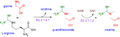 Creatine Synthesis
 -
 Creatine Kinase and Phosphocreatine Energy Shuttle
 -
 Muscle Total Creatine Stores
 -
 Plasma Creatine Concentration Over Time


.png)


Advertise on WikiMD — 81,000+ full articles, ~900,000 total pages, ~250 million page views. Global reach, limited time promotional rates from $1/page/day. Learn more · View stats


Translate page: - East Asian
中文,
日本,
한국어,
South Asian
हिन्दी,
தமிழ்,
తెలుగు,
Urdu,
ಕನ್ನಡ,
Southeast Asian
Indonesian,
Vietnamese,
Thai,
မြန်မာဘာသာ,
বাংলা
European
español,
Deutsch,
français,
Greek,
português do Brasil,
polski,
română,
русский,
Nederlands,
norsk,
svenska,
suomi,
Italian
Middle Eastern & African
عربى,
Turkish,
Persian,
Hebrew,
Afrikaans,
isiZulu,
Kiswahili,
Other
Bulgarian,
Hungarian,
Czech,
Swedish,
മലയാളം,
मराठी,
ਪੰਜਾਬੀ,
ગુજરાતી,
Portuguese,
Ukrainian
About WikiMD • Contact • Disclaimer • Privacy • Copyright • Site statistics
Some content and images may originate from Wikimedia Commons or Wikipedia and remain subject to their stated licenses. Unless otherwise noted, eligible WikiMD content is available under CC BY-SA 4.0.
WikiMD Wellnesspedia — Free health & wellness information for patients, students, and health professionals.

