Centers for Disease Control and Prevention
United States national public health institute

The Centers for Disease Control and Prevention (CDC) is the national public health institute of the United States. It is a federal agency under the Department of Health and Human Services and is headquartered in Atlanta, Georgia. The CDC's primary goal is to protect public health and safety through the control and prevention of disease, injury, and disability in the US and internationally.
History[edit]
The CDC was founded in 1946 as the Communicable Disease Center, a branch of the United States Public Health Service. Its initial focus was on fighting malaria by spraying insecticides and conducting research. Over the years, the CDC expanded its scope to include all communicable diseases, chronic diseases, occupational health, and environmental health.

In 1970, the agency was renamed the Center for Disease Control, and in 1992, it became the Centers for Disease Control and Prevention, although the acronym CDC remained the same. The CDC has played a crucial role in responding to public health emergencies, including the HIV/AIDS epidemic, the H1N1 influenza pandemic, and the COVID-19 pandemic.
Organization[edit]
The CDC is organized into several centers, institutes, and offices, each focusing on different aspects of public health. These include the National Center for Emerging and Zoonotic Infectious Diseases, the National Center for Chronic Disease Prevention and Health Promotion, and the National Institute for Occupational Safety and Health, among others.

The CDC is led by a director, who is appointed by the President of the United States. The director oversees the agency's operations and sets strategic priorities.
Functions[edit]
The CDC's primary functions include:
- Conducting research and providing information on infectious and non-infectious diseases.
- Developing and implementing disease prevention and control strategies.
- Providing guidance and support to state and local health departments.
- Monitoring and responding to public health emergencies.
- Promoting health and safety in the workplace.
Facilities[edit]
The CDC's main campus is located in Atlanta, Georgia, with additional facilities across the United States. The agency's laboratories and offices are equipped to handle a wide range of public health challenges.

Leadership[edit]
The CDC has been led by several notable directors who have contributed to its mission and growth. Some of the past directors include:

David J. Sencer 
Louis L. Williams 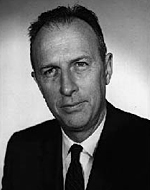
Mark D. Hollis 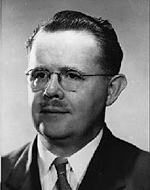
Justin M. Andrews


Impact[edit]
The CDC has had a significant impact on public health in the United States and around the world. Its work in disease prevention, health promotion, and emergency response has saved countless lives and improved the quality of life for many people.
Related pages[edit]
Sponsored Health Resource

W8MD Weight Loss, Sleep & MedSpa
Looking for physician-supervised weight loss, semaglutide, tirzepatide, or GLP-1 receptor agonist options? W8MD helps eligible patients in New York City, Brooklyn, New Jersey, Connecticut, Pennsylvania, Delaware, and greater Philadelphia with medical weight loss, sleep medicine, and long-term maintenance support.
GLP-1 specials: Affordable GLP-1 injections NYC and Philadelphia starting from $29.99/week and up for semaglutide with insurance accepted for qualifying visits, and $45/week and up for tirzepatide with insurance accepted for qualifying visits. Self-pay options start from $59.99/week and up for semaglutide and $69.99/week and up for tirzepatide.
- Medical weight loss NYC
- Affordable GLP-1 injections NYC
- Budget GLP-1 weight loss shots Philadelphia
- New Jersey medical weight loss
- NYC medical weight loss blog
- Philadelphia weight loss blog
- Sleep medicine and sleep apnea services
- W8MD MedSpa and wellness
Book a W8MD appointment · View GLP-1 specials
Paid promotional message. Eligibility, pricing, insurance coverage, medication availability, and results vary. Medical evaluation required.

Medical Disclaimer: WikiMD is for informational purposes only and is not a substitute for professional medical advice. Content may be inaccurate or outdated and should not be used for diagnosis or treatment. Always consult your healthcare provider for medical decisions. Verify information with trusted sources such as CDC.gov and NIH.gov. By using this site, you agree that WikiMD is not liable for any outcomes related to its content. See full disclaimer.
Credits:Most images are courtesy of Wikimedia commons, and templates, categories Wikipedia, licensed under CC BY SA or similar.
Translate page: - East Asian
中文,
日本,
한국어,
South Asian
हिन्दी,
தமிழ்,
తెలుగు,
Urdu,
ಕನ್ನಡ,
Southeast Asian
Indonesian,
Vietnamese,
Thai,
မြန်မာဘာသာ,
বাংলা
European
español,
Deutsch,
français,
Greek,
português do Brasil,
polski,
română,
русский,
Nederlands,
norsk,
svenska,
suomi,
Italian
Middle Eastern & African
عربى,
Turkish,
Persian,
Hebrew,
Afrikaans,
isiZulu,
Kiswahili,
Other
Bulgarian,
Hungarian,
Czech,
Swedish,
മലയാളം,
मराठी,
ਪੰਜਾਬੀ,
ગુજરાતી,
Portuguese,
Ukrainian

