COVID-19 vaccination in the United States
COVID-19 Vaccination in the United States
The COVID-19 vaccination campaign in the United States has been a crucial step in combating the ongoing pandemic. This article provides a comprehensive overview of the vaccination efforts, including the distribution strategy, vaccine types, and the impact on public health.
Distribution Strategy[edit]
The United States government, in collaboration with state and local health departments, has implemented a distribution strategy to ensure the efficient and equitable delivery of COVID-19 vaccines. The strategy focuses on prioritizing high-risk populations, healthcare workers, and essential workers.
To facilitate the distribution process, the Centers for Disease Control and Prevention (CDC) has established the Vaccine Adverse Event Reporting System (VAERS). This system allows healthcare providers to report any adverse events following vaccination, ensuring the safety and effectiveness of the vaccines.
Vaccine Types[edit]
Several COVID-19 vaccines have been authorized for emergency use in the United States. These vaccines have undergone rigorous testing and evaluation to ensure their safety and efficacy. The most commonly used vaccines in the country include:
Pfizer-BioNTech[edit]
The Pfizer-BioNTech vaccine, also known as BNT162b2, is an mRNA-based vaccine. It requires two doses administered three weeks apart and has shown high efficacy in preventing COVID-19 infection.
Moderna[edit]
The Moderna vaccine, known as mRNA-1273, is another mRNA-based vaccine. Similar to the Pfizer-BioNTech vaccine, it requires two doses administered four weeks apart and has demonstrated high efficacy in preventing COVID-19.
Johnson & Johnson[edit]
The Johnson & Johnson vaccine, also referred to as Janssen COVID-19 vaccine, is a viral vector-based vaccine. It requires a single dose and has shown effectiveness in preventing severe illness and hospitalization due to COVID-19.
Impact on Public Health[edit]
The COVID-19 vaccination campaign has had a significant impact on public health in the United States. Vaccination efforts have contributed to a decline in COVID-19 cases, hospitalizations, and deaths.
By achieving high vaccination rates, the United States aims to achieve herd immunity, where a significant portion of the population is immune to the virus. This will help prevent future outbreaks and allow for a return to normalcy.
Future Considerations[edit]
As the COVID-19 vaccination campaign continues, ongoing monitoring and research are essential. This includes tracking vaccine effectiveness, potential side effects, and the emergence of new variants.
Additionally, public health officials are working to address vaccine hesitancy and ensure equitable access to vaccines across all communities. Efforts are being made to provide accurate information, dispel myths, and address concerns to encourage widespread vaccination.
See Also[edit]
References[edit]
<references />
-
 US map. Percent of the total population who are up to date with COVID-19 vaccines
 -
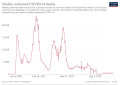 Timeline of weekly confirmed COVID-19 deaths in the United States
 -
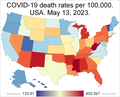 Map of cumulative COVID-19 death rates by US state
 -
 US map. Percent of total population of all ages by state or territory who completed the COVID-19 vaccination primary series
 -
 USA. Percent of people receiving at least one COVID-19 dose reported to the CDC by state or territory for the total population
 -
 Timeline of daily COVID-19 vaccine doses administered in the US
 -
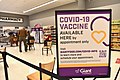 Pharmacy vaccinations (2021)
 -
 Kamala Harris getting her second COVID-19 vaccination
 -
 Larkspur mass vaccination site
 -
 COVID-19 Poster offering vaccine for children 5 through 11 years of age
 -
 Covid Vaccine 31
 -
 Covid Vaccine 13


.jpg)


.jpg)
.jpg)
Ad. Transform your life with W8MD's
GLP-1 weight loss injections special from $29.99 with insurance
|
WikiMD Medical Encyclopedia |
Medical Disclaimer: WikiMD is for informational purposes only and is not a substitute for professional medical advice. Content may be inaccurate or outdated and should not be used for diagnosis or treatment. Always consult your healthcare provider for medical decisions. Verify information with trusted sources such as CDC.gov and NIH.gov. By using this site, you agree that WikiMD is not liable for any outcomes related to its content. See full disclaimer.
Credits:Most images are courtesy of Wikimedia commons, and templates, categories Wikipedia, licensed under CC BY SA or similar.
Translate this page: - East Asian
中文,
日本,
한국어,
South Asian
हिन्दी,
தமிழ்,
తెలుగు,
Urdu,
ಕನ್ನಡ,
Southeast Asian
Indonesian,
Vietnamese,
Thai,
မြန်မာဘာသာ,
বাংলা
European
español,
Deutsch,
français,
Greek,
português do Brasil,
polski,
română,
русский,
Nederlands,
norsk,
svenska,
suomi,
Italian
Middle Eastern & African
عربى,
Turkish,
Persian,
Hebrew,
Afrikaans,
isiZulu,
Kiswahili,
Other
Bulgarian,
Hungarian,
Czech,
Swedish,
മലയാളം,
मराठी,
ਪੰਜਾਬੀ,
ગુજરાતી,
Portuguese,
Ukrainian
