Banana chip
Banana chip is a snack produced from sliced bananas, which are then fried or baked until they reach a crispy consistency. They are popular in tropical regions where bananas are a staple food, but they have also gained popularity worldwide due to their unique taste and nutritional benefits.
History[edit]
The origin of the banana chip is believed to be in the Philippines, where they are known as chifles. They were traditionally made by frying thinly sliced bananas in coconut oil until they became crispy. This method of preparation has been passed down through generations and is still used today.
Production[edit]
The production of banana chips involves several steps. First, ripe bananas are peeled and sliced into thin pieces. The slices are then soaked in a solution of turmeric or lemon juice to prevent them from turning brown. After soaking, the slices are drained and then fried or baked until they become crispy. The chips are then cooled and packaged for sale.
Nutritional Value[edit]
Banana chips are a good source of potassium, vitamin C, and fiber. However, they are also high in calories and fat, especially if they are fried. Baked banana chips are a healthier alternative as they contain less fat.
Varieties[edit]
There are several varieties of banana chips available in the market. Some are coated with sugar or honey to make them sweet, while others are sprinkled with salt to give them a savory flavor. There are also banana chips that are flavored with spices like chili or curry.
In Popular Culture[edit]
Banana chips have been featured in various forms of media, including movies, television shows, and books. They are often associated with tropical locations and are commonly included in trail mix or served as a snack at parties.
See Also[edit]

-
 Chips de bananes de São Tomé-et-Príncipe
 -
 Banana chips from the Philippines made with Saba bananas
 -
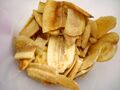 Keripik pisang Lampung
 -
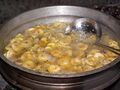 Banana Chips preparation
 -
 Chips Palakkad
 -
 Homemade 4 Cut Banana Chips
 -
 Jaggery Chips BNC
 -
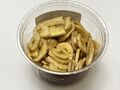 Banana chips from Giant in the Franklin Farm section of Oak Hill, Fairfax County, Virginia
 -
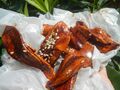 Pinasugbo
 -
 Banana Chips in Palakkad
 -
 Banana Chips from India
 -
 Ripe Banana Chips


Medical Disclaimer: WikiMD is for informational purposes only and is not a substitute for professional medical advice. Content may be inaccurate or outdated and should not be used for diagnosis or treatment. Always consult your healthcare provider for medical decisions. Verify information with trusted sources such as CDC.gov and NIH.gov. By using this site, you agree that WikiMD is not liable for any outcomes related to its content. See full disclaimer.
Credits:Most images are courtesy of Wikimedia commons, and templates, categories Wikipedia, licensed under CC BY SA or similar.
Translate page: - East Asian
中文,
日本,
한국어,
South Asian
हिन्दी,
தமிழ்,
తెలుగు,
Urdu,
ಕನ್ನಡ,
Southeast Asian
Indonesian,
Vietnamese,
Thai,
မြန်မာဘာသာ,
বাংলা
European
español,
Deutsch,
français,
Greek,
português do Brasil,
polski,
română,
русский,
Nederlands,
norsk,
svenska,
suomi,
Italian
Middle Eastern & African
عربى,
Turkish,
Persian,
Hebrew,
Afrikaans,
isiZulu,
Kiswahili,
Other
Bulgarian,
Hungarian,
Czech,
Swedish,
മലയാളം,
मराठी,
ਪੰਜਾਬੀ,
ગુજરાતી,
Portuguese,
Ukrainian

